


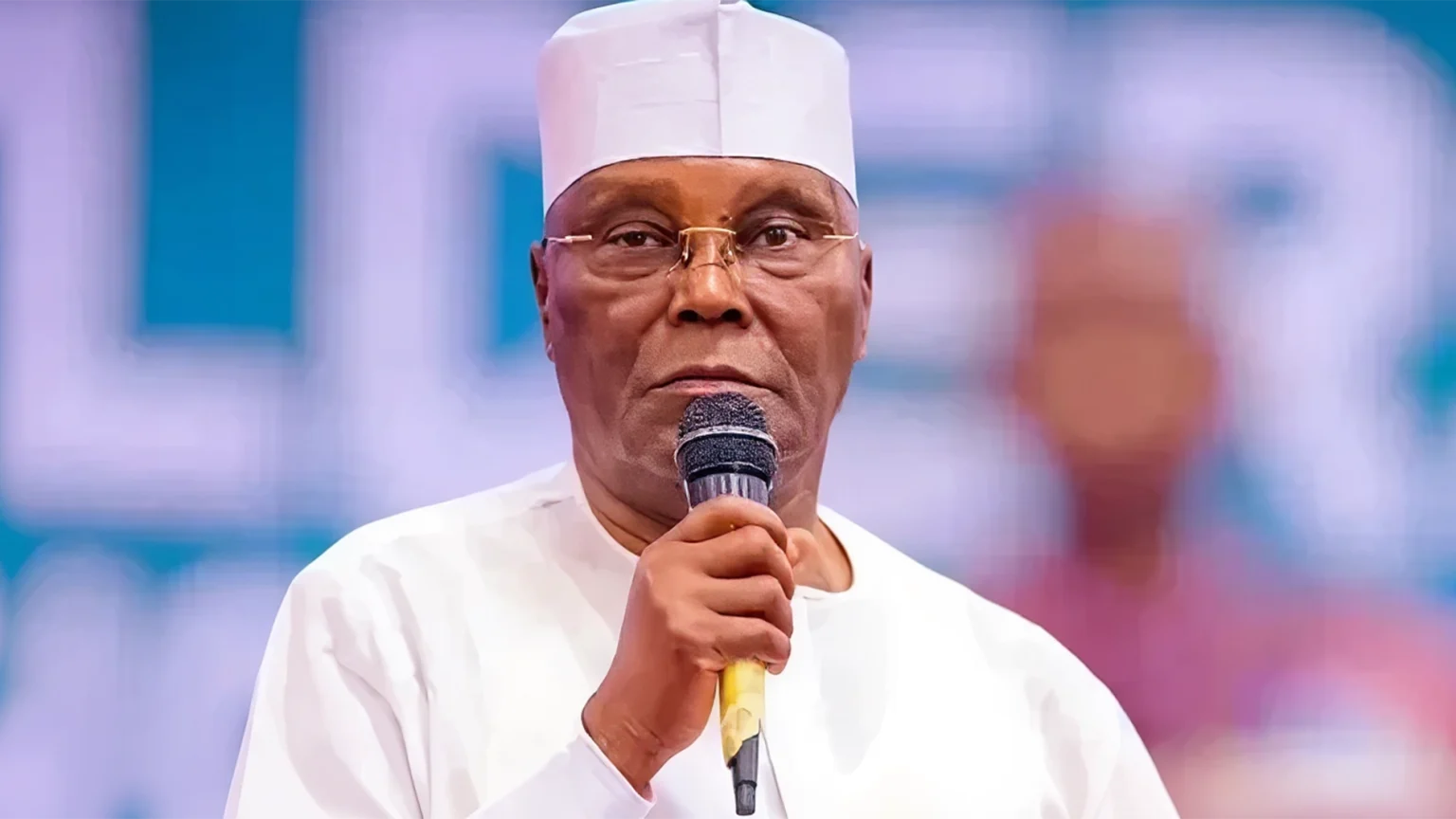
Former Vice President and African Democratic Congress, ADC, presidential candidate Atiku Abubakar has demanded that President Bola Tinubu order a transparent, independent investigation into the alleged Presidential Foreign Intervention Promotion Council, PFIPC, scandal within seven days.
Atiku warned that without a credible inquiry, public suspicion will grow that senior government officials may have benefited from the alleged fraud, and that Nigerians seeking public sector jobs may have been defrauded through a scheme that appeared to have official
In a statement released on Friday by his Senior Special Assistant on Public Communication, Phrank Shaibu, Atiku said the PFIPC controversy has moved beyond claims of document forgery. It now poses a fundamental question about how Nigeria’s institutions function.
“The key issue is no longer whether an individual forged documents or impersonated government officials,” he said. “It is how official government processes allegedly recognised, processed and advanced the affairs of an agency the Presidency insists never existed.”
The focal point of the allegations is Adeniyi Adeyemi, who is accused of creating and running PFIPC. The Presidency, through Special Adviser on Information and Strategy Bayo Onanuga, has maintained that the agency was never authorized and described Adeyemi’s actions as impersonal
“If the government wants Nigerians to believe that one man single-handedly created an office for himself, secured office space within a government facility, held meetings with foreign embassy delegations, paid courtesy visits to the EFCC, processed staff salaries through official channels, allegedly operated institutional accounts, and carried on all these activities without the knowledge, approval, negligence or collaboration of anyone within government, then that narrative raises even more troubling questions than it answers,” he said.
He argued that even if Adeyemi is prosecuted, institutions must explain how such an operation allegedly moved through budgetary, administrative, security, and financial systems without being flagged.
“What kind of government system allows such an elaborate operation to pass through budgetary, administrative, security and institutional channels without detection? Nigerians cannot be asked to swallow such a story whole,” Atiku stated.
He said PFIPC appeared in the 2026 Appropriation Act with a multi-billion-naira allocation. He also cited reports that the Office of the Head of the Civil Service of the Federation allegedly approved the recruitment of more than 300 personnel into the agency
“Budget preparation is a structured process involving ministries, departments and agencies, the Budget Office, the National Assembly and ultimately presidential assent. Recruitment into the Federal Civil Service also follows established procedures. These things do not happen by accident,” he said.
He further questioned how an individual could allegedly secure government office space, engage foreign missions, and access official financial channels if no institutional support existed.
“While Adeyemi’s personal background may be relevant to the allegations against him, it cannot explain how the agency allegedly secured office space, interacted with public institutions and foreign missions, or appeared to benefit from official government processes,” Atiku argued.
The controversy intensified after Adeyemi publicly denied the allegations and claimed that powerful figures were trying to silence him.
“Whether his claims are true or false is not for the Presidency to determine through press statements. That is precisely why Nigeria needs an independent investigation. Let the facts speak. Let every document be examined. Let every approval be traced. Let every official who acted, neglected a duty or enabled this scandal be identified and held accountable,” he said.
First, the integrity of the budgeting process. If an unapproved agency can appear in an appropriation law with funding attached, it undermines public confidence in how national resources are allocated.
Second, the credibility of the Federal Civil Service. If recruitment can be authorized for an entity that the government later disowns, it calls into question personnel and vetting procedures.
Third, institutional oversight. Security, administrative, and financial controls are expected to detect and stop irregular operations before they scale.
Fourth, presidential accountability. Because the alleged agency bore the name “Presidential” and operated in ways that suggested official authorization, the Presidency must account for what happened in its name.
Atiku gave President Tinubu seven days to constitute an independent panel to probe the matter. He warned that anything short of that will deepen public distrust and reinforce perceptions that the government is shielding influential actors.
“Failure to do so would deepen public suspicion that influential figures within government may have benefited from the alleged fraud and that Nigerians seeking public sector appointments may have been defrauded through a scheme that enjoyed official protection,” he said.
Nigeria is preparing for the 2027 election cycle, and public confidence in institutions is a central political issue. Allegations of phantom agencies, payroll fraud, or budget manipulation can quickly become flashpoints because they combine financial loss with betrayal of public trust.
The ADC, which Atiku now fronts, has positioned itself as a party demanding accountability and reform. By framing PFIPC as a systemic failure rather than just an individual crime, Atiku is widening the political stakes of the scandal.
Who approved the hiring of over 300 staff, and were salaries paid through official government was office space allocated, and who facilitated engagements with foreign missions and agencies like the EFCC?Which ministries, departments, or officials missed or ignored red flags, and what consequences should follow
Atiku’s demand puts the Tinubu administration on a tight timeline to respond. The government must decide whether to treat PFIPC as a contained case of impersonation or as a broader institutional failure requiring external scrutiny.
The former vice president’s position is clear: if one person could run an alleged agency through multiple government processes undetected, then the system itself needs fixing. An independent investigation, he argues, is the only way to trace approvals, identify enablers or negligent officials, and reassure Nigerians that public institutions are not vulnerable to large-scale abuse