


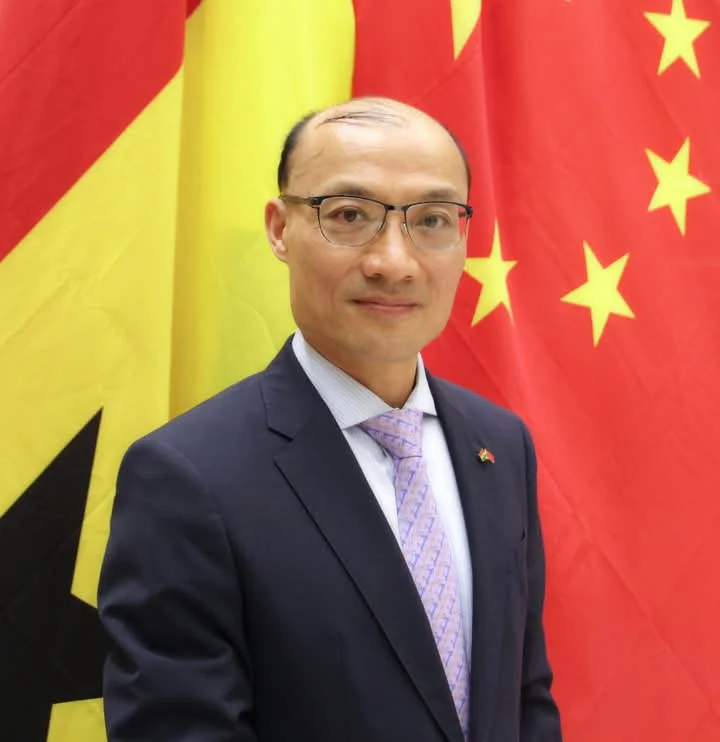
Chinese Ambassador to Ghana, Tong Defa, has appealed to the Ghanaian media to adopt a more balanced and evidence-based approach in their coverage of the mining sector, particularly when reporting on the activities of Chinese companies.
He said objective journalism is essential for strengthening diplomatic relations and promoting sustainable mining practices across the country.
The Ambassador made the call at Aburi during the opening session of a three-day training workshop on Sustainable Mining for Journalists. The programme, organised by the Ghana News Agency (GNA) in partnership with the Association of China–Ghana Mining (ACGM), brought together reporters, industry experts and regulatory officials to discuss ethical mining practices, environmental protection and industry compliance.
Mr. Tong emphasised that while China fully supports Ghana’s fight against illegal mining, the actions of a small minority of offenders often overshadow the far-reaching contributions of legitimate Chinese companies operating within Ghana’s mining sector. He described this trend as unfair and urged journalists to ensure that their work reflects the complete picture rather than isolated incidents.
“There are thousands of Chinese companies doing well in this country—investing, creating jobs and supporting communities. Yet, the bad actions of a tiny minority dominate the headlines,” he said. “I appeal to our media friends to report comprehensively and objectively about China, so the Ghanaian public can appreciate the full reality of our cooperation.”
The Ambassador highlighted the work of several Chinese firms—Shandong Gold, Zijin Mining, Chifeng Gold, Xiaocheng Technology and Tianyuan Manganese—whose operations he said align with Ghana’s legal, environmental and social standards. He noted that at the Cardinal Namdini Mine, operated by Shandong Gold, 94 percent of the mine’s 1,600 contractor workforce are Ghanaians, with the company investing more than $2 million into community development projects, including education, sanitation, healthcare, and a 25-kilometre access road linking multiple communities.
Chifeng Gold’s Wassa Mine, he added, has committed over US$4.5 million to a Community Development Fund that supports schools, water systems, health facilities and road projects, while also partnering with local farmers to develop a medium-scale palm oil processing plant.
“These examples are only the tip of the iceberg,” he said, encouraging journalists to visit mining sites to witness firsthand how responsible Chinese companies are contributing to local development.
Mr. Tong reaffirmed China’s commitment to supporting Ghana’s mining reforms, environmental protection efforts and broader industrialisation agenda. He said recent high-level discussions between President Xi Jinping and President John Dramani Mahama demonstrate China’s readiness to deepen cooperation across mining, energy, agriculture and infrastructure.
“China is prepared to work with Ghana throughout the entire mining value chain—from exploration and geological surveys to resource development and environmental protection. We continue to urge Chinese companies to strictly follow Ghanaian laws and decisively combat illegal mining,” he stated.
General Manager of the Ghana News Agency, Mr. Albert Kofi Owusu, said the workshop aims to enhance journalists’ understanding of natural resource governance and equip them to provide accurate, balanced and impactful reports. He noted that while mining contributes significantly to Ghana’s economy, irresponsible practices—particularly illegal mining—pose severe threats to the environment and community livelihoods, making responsible reporting even more critical.
Chairman of the Association of China–Ghana Mining, Tang Zhenjiang, also highlighted ongoing investments by Chinese firms in education, health, renewable energy and community infrastructure. He emphasised that responsible mining must be matched by responsible journalism to ensure that public narratives reflect factual developments and promote meaningful cooperation.