

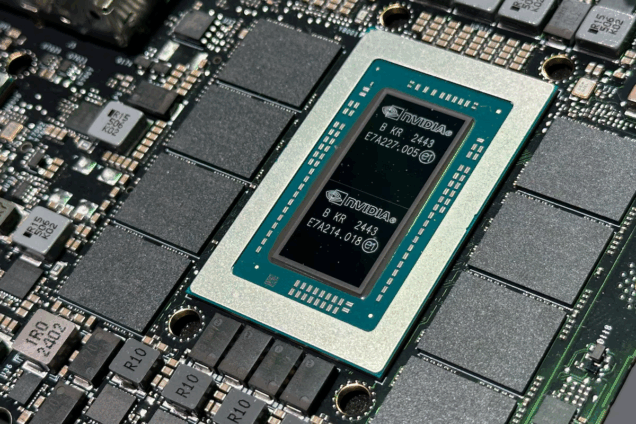
The administration of U.S. President Donald Trump has initiated an inter-agency review that could pave the way for the first exports of Nvidia’s H200 artificial intelligence chips to China, according to five sources familiar with the matter. The move follows Trump’s recent pledge to permit the controversial sales under a new framework.
Earlier this month, President Trump announced that his administration would allow Nvidia to sell its H200 chips, the company’s second-most powerful AI processors, to Chinese buyers, subject to a 25 percent government fee. Trump argued that the decision would help American technology firms maintain their global lead by reducing demand for Chinese-made alternatives.
The announcement immediately triggered criticism from lawmakers and policy experts across the U.S. political spectrum who warn that supplying advanced AI hardware to China could enhance Beijing’s military capabilities and weaken Washington’s technological edge.
Despite Trump’s public stance, uncertainty has lingered over how quickly the sales could be approved and whether Chinese authorities would permit domestic companies to proceed with purchases.
Sources say the U.S. Commerce Department, which oversees export controls, has now forwarded Nvidia-related license applications to the Departments of State, Energy, and Defense for formal review. Under export regulations, those agencies have 30 days to assess the applications and submit their recommendations.
An administration official stressed that the process will be comprehensive and not symbolic, noting that national security considerations will be central to the review. However, under U.S. law, the final authority on export approvals rests with the president.
Neither the Commerce Department nor Nvidia responded immediately to requests for comment. A White House spokesperson declined to address the specifics of the review but said the administration remains committed to protecting U.S. technological leadership while safeguarding national security interests.
The move marks a sharp shift from policies under former President Joe Biden, whose administration imposed sweeping restrictions on advanced AI chip exports to China and other countries seen as potential intermediaries. Those measures were justified by concerns that sensitive technologies could be diverted for military use.
Trump’s approach also represents a reversal from his first term, when he aggressively curtailed China’s access to U.S. technology, citing allegations of intellectual property theft and military exploitation—claims China has repeatedly denied.
Critics remain unconvinced. Chris McGuire, a former National Security Council official under President Biden, described the potential exports as a serious strategic error, arguing that advanced chips remain a key constraint on China’s AI ambitions.
Others within the Trump administration disagree. Officials led by White House AI adviser David Sacks contend that controlled exports could actually slow China’s domestic chipmakers, including Huawei, by keeping them dependent on U.S. technology rather than accelerating indigenous alternatives.
Meanwhile, Nvidia is reportedly considering increasing production of the H200 chip after strong interest from Chinese buyers exceeded current manufacturing capacity. Although less powerful than Nvidia’s latest Blackwell chips, the H200 remains widely used in advanced AI applications and has never previously been approved for sale to China.
Trump had earlier explored allowing exports of a scaled-down version of the Blackwell chips but ultimately opted to open discussions around the H200 instead, positioning it as a compromise between commercial opportunity and national security concerns.