Home Blog Page 45

Bryan Acheampong dismisses historical comparisons, says Bawumia’s performance was regressive

0

Aspiring New Patriotic Party flagbearer, Dr Bryan Acheampong, has delivered a forthright assessment of the party’s 2024 presidential showing, arguing that the results under Dr Mahamudu Bawumia amounted to a clear rejection by the electorate.

Speaking on PM Express, the former Member of Parliament for Abetifi and former Minister of Food and Agriculture said the election figures leave little room for interpretation. In his view, prolonged exposure and extensive promotion did not translate into electoral success.

“Everything ended at 41 per cent,” Dr Acheampong stated, insisting that the outcome reflected market rejection rather than voter uncertainty. He described Dr Bawumia as the most extensively promoted candidate in the party’s history, having spent eight years as Vice President after another eight years as a running mate.

“Sixteen years of marketing produced 41 per cent,” he said.

He contrasted that outcome with the party’s experience under former President Nana Addo Dankwa Akufo-Addo, noting that Akufo-Addo secured 49.7 per cent after just eight months of national campaigning during his first presidential attempt.

“That comparison does not help the argument being made. It makes the situation worse,” he argued.

Dr Acheampong further cited the party’s 2024 electoral map as unprecedented and deeply concerning. According to him, the NPP failed to secure a single presidential constituency in seven regions.

“He could not win seven regions in this country,” he said, listing Volta, Oti, Upper East, Upper West, Savannah and Bono East among those where the party recorded zero presidential constituency wins.

He explained that expectations going into the 2024 race had been significantly higher, particularly regarding performance in the northern parts of the country.

“One of the key beliefs in 2023 was that presenting Dr Bawumia would help us hold the northern vote,” he said, adding that the assumption collapsed at the polls.

“Out of the regions where we failed completely, five are in the northern half of Ghana,” he noted.

Dr Acheampong also highlighted setbacks in other traditionally competitive areas. In the Western Region, he said the party contested 17 constituencies but secured only one presidential win. In the Central Region, just two presidential constituencies were won out of 23, while in Greater Accra, the NPP managed only two presidential victories out of 34 constituencies.

“These are the realities the delegates must consider,” he said, stressing that personal attributes or historical arguments cannot outweigh performance.

Returning to his market analogy, Dr Acheampong said political parties, like businesses, are guided by results.

“If you market someone for 16 years and get 41 per cent, and another for eight months and get nearly 50 per cent, then clearly the sales did not meet expectations,” he said. “People will change the product.”

When reminded that political history often favours candidates who contest multiple times before winning, Dr Acheampong rejected the parallel, insisting that the NPP’s tradition has been driven by measurable improvement rather than routine repetition.

“We don’t operate on habit. We operate on performance,” he said.

He cited the party’s decisions in previous elections, explaining that former President John Agyekum Kufuor was given another chance because his vote share improved over time, eventually leading to victory. He made a similar case for Nana Akufo-Addo, whose electoral performance steadily increased before winning the presidency.

“In each case, the numbers went up,” he said. “That growth justified a return.”

Dr Acheampong concluded that the same standard must apply going forward, arguing that delegates would ultimately base their decisions on electoral outcomes rather than sentiment or longevity.

Rwanda & the Gambia Top Visa-Openness Ranking’s as the Sudan crisis is named the World’s worst Humanitarian emergency.

0

Rwanda and The Gambia have emerged as continent-leading examples of border openness in the latest Africa Visa Openness reporting, while Sudan’s multi-year conflict continues to deepen into what humanitarian agencies now describe as the world’s worst current crisis. The two developments—one pointing to deliberate policy choices to attract people and investment, the other exposing catastrophic human suffering—together capture two contrasting realities shaping Africa in 2025.

Openness on the rise: Rwanda and The Gambia set the pace

Rwanda and The Gambia top the 2025 Africa Visa Openness Index, a measure produced in partnership with African institutions to track how national visa policies either facilitate or impede travel, trade and tourism across the continent. The report shows both countries sustaining policies that reduce administrative friction—visa-free regimes, visa-on-arrival and streamlined e-visa systems—that make entry easier for visitors and business travellers.

Policy makers in Kigali and Banjul have repeatedly framed visa liberalization as an economic and soft-power tool. In Rwanda’s case, the government has leveraged a visa-free regime and investment-friendly messaging to cultivate tourism, conferences and regional integration since 2019; The Gambia’s compact geography and targeted visa waivers have similarly boosted arrivals and positioned the country as an accessible holiday and business destination.

Analysts say the benefits extend beyond short-term tourist receipts. Easier cross-border movement lowers transaction costs for small businesses, facilitates attendance at regional trade fairs, and supports the development of services sectors such as conventions, aviation and hospitality. For smaller economies, the economic case for openness can be especially compelling.

Modernizing access: e-visas and government digitalization

The 2025 findings highlight the rapid growth of digital travel tools—e-visas and electronic travel authorizations (ETAs)—which allow governments to preserve border controls while reducing delays for bona fide travellers. Kenya, for example, moved up the rankings following updates that expanded ETA exemptions; other countries are using digital platforms to automate checks, speed processing, and gather data for planning. The shift is not merely technical: it signals a policy orientation toward services and trade facilitation.

However, the report cautions that openness is uneven. Several countries that would benefit from tourism and investment remain constrained by reciprocal visas, security concerns, or limited digital capacity. The index calls for complementary investments—air connectivity, visa interoperability among regional blocs, and strengthened migration management—to translate openness into measurable economic gains.

Strategic gains—and hard choices—for policy makers

Decision makers face trade-offs. Easing access can expose weak customs and migration systems to new pressures and requires improved border infrastructure and training. But governments cited in the report stress that the alternative—restrictive entry regimes—risks isolating economies and missing growth opportunities as intra-African travel expands under AfCFTA (African Continental Free Trade Area) frameworks.

For private sector actors, visa liberalization is a signal. Travel consultants, airlines and hotel chains factor visa ease into route planning and investment decisions; a clearer, predictable policy environment reduces the cost of doing business and raises the chance that tourists and investors choose a particular market over a regional rival.

In stark contrast: Sudan’s humanitarian catastrophe

While some African states compete to welcome more visitors, Sudan remains trapped in a catastrophic humanitarian emergency. International agencies and watchdogs now describe the situation there as among the worst—if not the worst—humanitarian crises worldwide. Years of conflict have displaced millions, disrupted markets, and driven levels of hunger, disease and protection needs that outstrip the response capacity on the ground.

UN agencies report that tens of millions of people across Sudan and in neighbouring countries require assistance; famine has been confirmed in parts of the country and large numbers of internally displaced persons face dangerous conditions in camps and informal sites. Humanitarian operations are hampered by access constraints, insecurity, and funding shortfalls.

Regional ripple effects: displacement, borders and politics

Sudan’s collapse has spilled across borders. Millions of refugees have fled to Chad, South Sudan, Egypt and other states, straining resources in host communities and creating complex protection and coordination challenges. The crisis has also raised geopolitical tensions as regional bodies and foreign powers jostle to influence outcomes and secure corridors for humanitarian relief.

The scale of displacement has complicated the visa-openness conversation in neighbouring states: while openness supports mobility for commerce and tourism, the region must now reconcile humanitarian protection needs with border management capacities. Countries hosting refugees are balancing generosity with the fiscal and social costs of prolonged displacement.

The moral and operational imperatives for donors and governments

Humanitarian actors warn that without sustained and scaled funding, life-saving services will collapse. Reports point to critical shortfalls in food, health, shelter and water-sanitation programs. Donors face difficult choices amid competing global crises, but the consensus among agencies is clear: the scale of the emergency requires an immediate, well-resourced response and political pressure to expand humanitarian access across conflict lines.

The humanitarian imperative also coincides with longer-term development risks. Protracted displacement erodes human capital, damages livelihoods and delays recovery. Countries in the Sahel and Horn already wrestling with climate shocks and fragile governance now confront additional instability that can hinder regional economic integration and trade—precisely the gains visa openness seeks to unlock.

Policy implications: two agendas that must coexist

The visa openness agenda and the humanitarian response in Sudan are not unrelated. Policy coherence is required at regional and continental levels: while open borders and simplified travel can catalyse economic growth and integration, institutions and donors must also invest in crisis preparedness, cross-border protection systems, and scalable social services that absorb shocks. The AfCFTA and AU frameworks offer platforms for such coordination—but only if political will and resources follow.

For countries leading on openness, there is an opportunity to show leadership beyond tourism: by harmonizing refugee admission procedures, offering pathways for temporary labour, and contributing to regional response mechanisms, visa-open states can help buffer neighbouring crises while preserving the economic gains of liberalized travel.

  • Policy follow-through: Will countries that topped the openness index maintain reforms and invest in air and digital connectivity to turn access into measurable growth?

  • Humanitarian funding: Whether donors scale up support for Sudan will determine whether famine and displacement can be contained.

  • Regional coordination: The AU, regional economic communities and multilateral banks have roles to play in aligning mobility, trade and crisis response.

  • Migration governance: Improved data, interoperable e-visa systems and regional migration frameworks will be key to balancing mobility with security.

The 2025 snapshot of Africa’s border policies and humanitarian needs lays bare a continent of contrasts. Rwanda and The Gambia’s leadership on visa openness points to an agenda of connectivity, jobs and tourism-led growth. Sudan’s tragedy reminds policy makers, donors and publics that openness must be accompanied by robust systems to absorb shocks, protect civilians and sustain regional stability. How African governments—and their partners—manage both agendas will shape economic and human outcomes for millions in the years ahead.

NSA Flags 8,105 Personnel Following Internal Investigations; 1,840 Suspended

0

The National Service Authority (NSA) has flagged 8,105 personnel on the national service payroll following internal investigations that uncovered significant irregularities in the system. Of this number, 1,840 individuals have been temporarily suspended pending further investigation by the relevant security agencies.

Speaking at a press briefing on Monday, December 15, NSA Director-General Ruth Dela Seddoh revealed that the discrepancies were identified in three tertiary institutions: the University of Development Studies (UDS), Ghana Communication Technology University, and Akenten Appiah-Menka University of Skills Training and Entrepreneurial Development.

“The number of students who have officially graduated from the schools, compared with the number of students submitted to us, revealed discrepancies. Some schools are complicit in what is a large-scale cartel,” she said.

The investigations led to the arrest of 10 staff members from the institutions, who are now under scrutiny by the security agencies.

Addressing concerns over the recent shutdown of the national service portal after two extensions, Ms. Seddoh explained that the measure was necessary to allow for reposting, proper validation, and verification of personnel presence at their assigned stations.

“This timeline was not arbitrary. Enforcing the deadline was critical to ensure accurate deployment records, confirm the physical presence of personnel at their stations, and eliminate ghost or fraudulent registrations,” she said.

The Director-General emphasized that the process is structured to protect the integrity of the national service system and to ensure timely payment of allowances to verified personnel.

“The detailed validation and re-validation phases are essential to ensure that only eligible and physically present personnel receive their entitlements,” she added.

Florentino Perez Blasts Refereeing and Negreira Case After Real Madrid Victory Over Alaves

0

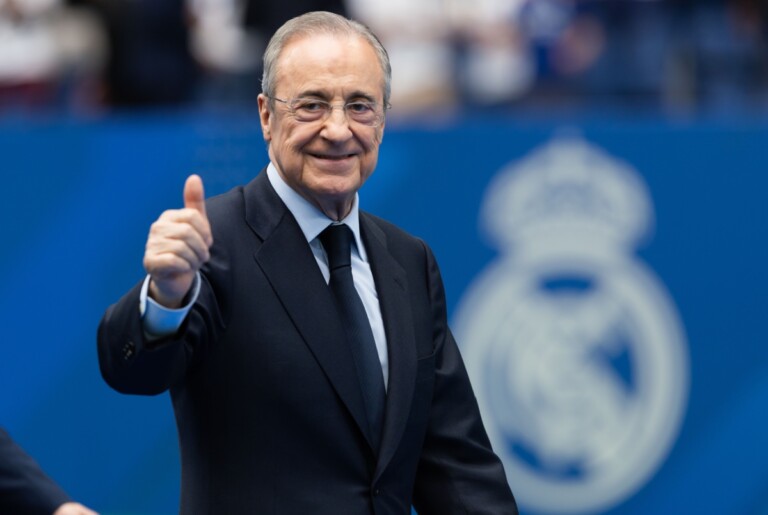
Real Madrid president Florentino Perez has renewed his criticisms of Spanish refereeing following Los Blancos’ 1-0 victory over Alaves on Sunday night. The win, which temporarily eased pressure on coach Xabi Alonso, was overshadowed by controversy over a late challenge on Vinicius Junior that many felt deserved a penalty.

During the match, Vinicius was visibly upset, claiming that the referee’s inaction was influenced by his presence on the pitch. Alonso also expressed disbelief that VAR did not intervene. While the victory provides breathing room for Alonso, the incident reignites ongoing debates about fairness in officiating in LaLiga.

In his annual Christmas address, Perez pointedly linked the controversy to the long-running ‘Negreira case,’ in which Barcelona stand accused of corrupt payments to Jose Maria Enriquez Negreira, former CTA Vice-President, for referee reports.

“Christmas is a time to reflect on the things that concern us. In our case, our biggest concern is the state of refereeing in Spain. It’s a problem that has transcended our borders and damaged the credibility and reputation of our competition,” Perez said, as quoted by Cadena SER.

Describing it as “the biggest scandal in the history of football,” Perez questioned why Real Madrid is “the only club fighting for justice” and criticized the RFEF and LaLiga for what he calls inaction in safeguarding the integrity of Spanish football.

Perez highlighted findings that over €8 million were paid for technical reports on referees, claiming that the intended recipients—Barcelona’s coaches—never even received the reports. “Who can believe that millions of euros were paid for reports that apparently must have been useless?” he asked.

The president also took aim at Pablo Gonzalez, the VAR official during Real Madrid’s clash with Alaves and the Copa del Rey final, citing his pre-match remarks about referees “taking action” against Los Blancos as an intimidation tactic.

Perez referenced testimony from Ernesto Valverde and Luis Enrique, former Barcelona coaches, who confirmed they never received or used the consultancy reports in question. Despite this, the president maintained that the payments represented systemic corruption that has harmed the sport’s integrity.

“We are certain that we are not the only ones harmed. Furthermore, it is possible that some clubs have been relegated as a result of the ‘Negreira case.’ The integrity and decency of our sport are at stake,” Perez stated.

This marks the second time in recent weeks that Perez has publicly criticized the case, previously using his platform at Real Madrid’s General Assembly to raise concerns about refereeing and fairness in Spanish football.

Marc-Andre ter Stegen Could Return as Barcelona Face Guadalajara in Copa del Rey

0

Barcelona goalkeeper Marc-Andre ter Stegen could make his first appearance of the season on Tuesday night as the Blaugrana travel to face Guadalajara in the Copa del Rey. Head coach Hansi Flick confirmed that first-choice goalkeeper Joan Garcia will be rested for the match.

Ter Stegen has been sidelined since undergoing back surgery earlier this year and only returned to training last week. Despite the German captain’s return, Flick emphasized that Joan Garcia remains his first-choice goalkeeper.

Speculation over ter Stegen’s future has intensified, particularly as Germany manager Julian Nagelsmann has stressed that the goalkeeper needs regular playing time to retain his position as the national team’s number one ahead of the World Cup. A loan move has been suggested as a potential solution.

“This is his decision,” Flick told ESPN. “We spoke about his situation and I respect Marc a lot because he’s a fantastic goalkeeper. He’s a really good player for us, also a good human for the team, but at the end it’s his decision and he has to decide, so it’s about that.”

Joan Garcia will be rested for at least a month, while Wojciech Szczesny, who was sidelined with a stomach bug during Barcelona’s win over Osasuna on Saturday, has returned to training. Flick indicated that a final decision on the starting goalkeeper will be made closer to kickoff.

“Joan will rest. But today is not the day to make the decisions [on who will play]. I want to wait until tomorrow,” Flick said.

Flick praised all three goalkeepers in his squad, acknowledging their importance both on and off the pitch. “Of course, Marc is a fantastic goalkeeper. In the goal, we have three excellent players. I am really happy about this. Joan is No.1, and we will see what happens. Tek [Szczesny] played a fantastic season last year—we won three titles with him. Also, this season, when Joan was injured, he gave us stability. Tek is not only important on the pitch, but also in the dressing room.”

Rayo Vallecano and Betis Share Points in Hard-Fought LaLiga Draw

0

Rayo Vallecano and Real Betis played out a goalless draw on Monday night at the Estadio de Vallecas, leaving both sides with heavy legs after crucial European victories on Thursday. Both clubs remain in contention for European qualification next season, though the most realistic targets appear to be the Europa League and Conference League.

The match got off to a stuttering start, with early injuries disrupting the flow. Diego Llorente of Betis and Jorge de Frutos of Rayo were both forced off, with de Frutos’ departure particularly concerning as he limped off in tears.

Rayo eventually found some rhythm, with Pacha Espino nearly opening the scoring at the back post, only to miss a close-range opportunity. Around the half-hour mark, the home side was gifted a golden chance when Isi Palazon was presented with an open goal, but his shot was comfortably saved by Alvaro Valles. A moment later, Inigo Perez looked on in disbelief as Isi, Nobel Mendy, and Alvaro Garcia converged on the ball, failing to capitalize on a near-perfect scoring opportunity.

After a slow start to the second half, Rayo again took control, forcing Betis defenders Marc Bartra and Natan into increasingly urgent interventions. Isi Palazon struck the post with just 20 minutes remaining, maintaining the sense that a goal would elude the hosts. Betis, meanwhile, managed four shots on target and tested Rayo goalkeeper Augusto Batalla, but were largely contained by a resilient home defense.

Rayo ended the match with triple the number of shots compared to Betis, applying sustained pressure in the closing stages. Despite their efforts, the final whistle confirmed a goalless draw.

Rayo Vallecano remain 13th in LaLiga, five points off 7th place, though recent wins by RCD Mallorca and Girona mean they are only three points above the relegation zone. Their winless streak in the league now extends to six matches, with just two losses in that period.

For Betis, the draw keeps them in 6th place, five points behind Espanyol and nine behind 4th-placed Atletico Madrid, maintaining their grip on a European qualification spot but highlighting the challenges ahead as they chase higher positions.

Former Speaker Prof. Mike Oquaye Criticises Lithium Mining Agreement, Calls for Higher Royalties

0

Former Speaker of Parliament, Professor Mike Oquaye, has criticised the lithium mining agreement between the government and Barari DV, describing the royalty framework as unfair and not in Ghana’s best interest.

His comments follow the withdrawal of the revised lithium agreement from Parliament on December 10, which was intended to allow for further stakeholder consultations.

The move came after concerns from the Majority in Parliament that the proposed 10 per cent royalty rate, negotiated under the Akufo-Addo administration, conflicted with the Minerals and Mining (Amendment) Act, 2010, which caps royalties at 5 per cent.

Speaking in an interview with Channel One TV on Monday, December 15, Prof. Oquaye argued that public debate should extend beyond the question of whether the royalty rate should be 10 per cent or 5 per cent. He stressed that Ghana needs to fundamentally rethink how it negotiates returns from its natural resources.

“Some people view the withdrawal purely in terms of the royalty percentage, from 10 per cent to 5 per cent,” he said. “But this 5 per cent has existed for a long time, and it reflects a persistent failure to protect national interests in the extractive sector.”

Prof. Oquaye expressed frustration that Ghana continues to accept minimal returns from high-value minerals.

“It is very painful to see that we possess valuable resources and yet we allow no more than 5 per cent in royalties. Who does that? Honestly, we have not been fair to our nation at all,” he said, suggesting that the country should aim for minimum royalties of at least 20 per cent.

The lithium agreement, initially presented to Parliament by Minister for Lands and Natural Resources Emmanuel Armah-Kofi Buah, concerns the exploration and mining of lithium and other minerals at Mankessim in the Central Region.

The deal has reignited discussions about Ghana’s mineral governance framework and the need for stronger terms that maximise national benefit.

Minister Haruna Iddrisu Commends UEW for Excellence in Teacher Training and Education Innovation

0

Minister for Education, Haruna Iddrisu, has lauded the leadership of the University of Education, Winneba (UEW), for their steadfast commitment to advancing teacher development, digital innovation, academic excellence, and graduate employability.

“You continue to demonstrate leadership in teacher quality enhancement, inclusive education strategies, postgraduate training, research into teaching and learning innovations, and mentoring the next generation of educators and administrators,” the Minister stated in a speech delivered on his behalf during the first session of the university’s 30th congregation.

A total of 8,288 students graduated from UEW across multiple faculties and schools, including Health, Allied Sciences and Home Economics Education, School of Business, Science Education, School of Education and Lifelong Learning, School of Communication and Media Studies, Faculty of Ghanaian Languages Education, Social Sciences Education, Social Studies Education, Foreign Languages Education, School of Graduate Studies, and the School of Creative Arts. The graduands were conferred with degrees, diplomas, and certificates.

According to Minister Iddrisu, UEW’s initiatives are central to the Ministry’s broader objectives of improving learning outcomes, strengthening teacher professionalism, and expanding technical and vocational capacity nationwide. He reaffirmed the Ministry’s commitment to supporting the university in achieving these goals.

He emphasized that UEW’s mission goes beyond awarding degrees, highlighting the institution’s role in shaping competent professional educators who form the backbone of Ghana’s workforce.

“The mission of UEW is not simply to award degrees; it is to shape the minds that shape the future,” the Minister remarked.

Addressing the graduands, Mr. Iddrisu encouraged them to embrace their new responsibilities with dedication and integrity. “Your graduation marks the beginning of a journey to lead, teach, inspire, and transform. As products of UEW, you must teach with passion, lead with humility, innovate fearlessly, serve with integrity, and inspire others to believe in themselves,” he said.

He further urged them to let their brilliance shine in classrooms, community leadership, administration, research, and public service, stressing that the nation depends on their knowledge and skill.

Professor Stephen Jobson Mitchual, Vice Chancellor of UEW, commended the government for its continuous support of the university. Reflecting on key national developments, he praised President John Mahama’s leadership style and decisive actions in promoting socio-economic development.

The VC also acknowledged the government’s commitment to transparency and collective efforts to curb illegal mining, emphasizing that UEW will continue to provide research-based insights and constructive contributions to the fight against galamsey.

Addressing the recent directive to implement Ghanaian languages as the medium of instruction from KG to Primary Three, Prof. Mitchual affirmed the university’s support for the policy, noting that its success will rely on professional expertise in language education, pedagogy, and curriculum development.

UEW remains committed to transforming knowledge into a force for societal enlightenment and empowerment for current and future generations. The Vice Chancellor also expressed gratitude to partners, including World Medical Relief for their upcoming donation of medical equipment and the Ghana Health Service for contributing equipment worth GH¢1 million.

“These contributions will significantly enhance our hospital’s capacity and strengthen our mission of providing quality healthcare services to our community and beyond,” Prof. Mitchual added.

Asantehene to Submit Bawku Peace Mediation Report to President Mahama

0

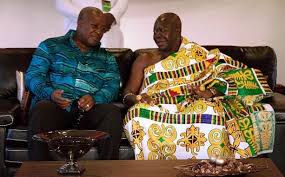
The Asantehene, Otumfuo Osei Tutu II, is set to present a comprehensive report on the Bawku peace mediation to President John Dramani Mahama today, December 16, marking a key milestone in efforts to achieve lasting stability in the municipality.

Appointed earlier this year by President Mahama, the Asantehene has been tasked with leading mediation efforts to resolve the long-standing chieftaincy dispute that has historically caused tension and conflict in Bawku.

The mediation process began in April 2025, with Otumfuo conducting separate consultations with leaders and representatives from the rival factions. These initial engagements were aimed at building trust, fostering dialogue, and establishing a foundation for peaceful negotiation.

Although the discussions experienced a temporary pause, they resumed in May 2025 and have since contributed to a period of relative calm in the previously volatile region.

The report to be submitted is expected to detail the progress achieved, identify ongoing challenges, and provide actionable recommendations to guide the government’s next steps toward sustainable peace in Bawku.

In parallel, the Ghana Armed Forces have confirmed that security presence in the area has been strengthened to maintain law and order as mediation efforts continue.

Kenya signs landmark $311m power transmission deal to strengthen National grid.

0

By Moses Akarh
Published: December 16, 2025

On Monday, December 15, 2025, Kenya took a major stride in modernizing its energy sector by signing a $311 million public-private partnership (PPP) agreement aimed at upgrading and expanding the nation’s power transmission network. This transformative investment underscores Kenya’s commitment to reliable electricity access and its vision of achieving a fully sustainable energy sector.

Major Power Infrastructure Deal Details

The deal, valued at approximately KSh 40.4 billion, was signed by the Kenya Electricity Transmission Company Limited (KETRACO) alongside two major partners: Africa50, a pan-African infrastructure investment fund, and the Power Grid Corporation of India. This collaboration reflects a growing trend in Kenya towards public-private partnerships to finance critical infrastructure, thereby reducing the reliance on government funding and leveraging international expertise.

Key Features of the Agreement:

  • Total Value: $311 million (≈ KSh 40.4 billion)

  • Partners: KETRACO, Africa50, Power Grid Corporation of India

  • Structure: Public-Private Partnership (PPP)

  • Scope: Design, finance, build, operate, and maintain two high-voltage transmission lines to improve grid stability and support renewable energy integration.

Transmission Lines and Strategic Impact

The project focuses on constructing 202 kilometers (125 miles) of high-voltage lines in Kenya’s western region, an area that has historically faced frequent power losses and supply unreliability. The two critical lines included in the project are:

  1. Lessos to Loosuk Line: Estimated at $214 million, this line will strengthen electricity delivery to western counties, reducing outages and stabilizing the regional grid.

  2. Kibos–Kakamega–Musaga Line: Valued at $97 million, this line will further improve reliability, particularly for northern and western Kenya.

These projects are expected to significantly lower technical losses, which were estimated at 23% in 2023, and facilitate the evacuation of renewable energy from geothermal and hydroelectric sources, a sector where Kenya has established global leadership.

Kenya’s Broader Energy Vision

This $311 million transmission project is part of a larger strategy to achieve universal electricity access by 2030 while relying predominantly on clean energy sources. Key initiatives include:

  • National Infrastructure Fund: The Cabinet has approved a KSh 5 trillion (~$38 billion) fund to mobilize public and private capital for infrastructure projects nationwide, with a strong focus on the power sector.

  • Electricity Capacity Expansion: Kenya plans to add 10,000 MW to the national grid over the next seven years, surpassing the current installed capacity of 3.3 GW, to support industrial growth and urban development.

  • Olkaria VII Geothermal Project: Expansion plans for Olkaria VII aim to add 80.3 MW by 2027, further reducing fossil fuel dependence and reinforcing Kenya’s status as a geothermal powerhouse.

Significance of the Deal

This landmark agreement is a testament to Kenya’s proactive approach in mobilizing international partnerships and innovative financing to de-risk critical infrastructure investments. By leveraging PPP models, Kenya not only attracts foreign investment but also ensures efficiency and technical expertise in implementing complex projects.

Experts suggest that these transmission lines will not only stabilize electricity supply in the targeted regions but will also create opportunities for industrial and technological growth by ensuring a reliable power flow to key commercial hubs. Additionally, these projects align seamlessly with Kenya’s long-term ambition to integrate more renewable energy into the national grid.

Regional and Economic Implications

Improved power transmission in western and northern Kenya is expected to attract both domestic and foreign investment in industrial, agricultural, and commercial sectors. Reliable energy supply is crucial for manufacturing, agro-processing, and ICT hubs, which are central to Kenya’s Vision 2030 industrialization targets.

Furthermore, the collaboration with Africa50 and the Power Grid Corporation of India sets a precedent for future cross-border infrastructure investments in Africa. This model could be replicated in other energy projects across the continent, contributing to regional stability and sustainable development.

Conclusion

The $311 million Kenya power transmission deal is more than just an infrastructure project—it represents a strategic investment in the nation’s future. By combining international expertise, innovative financing, and a commitment to renewable energy, Kenya is positioning itself as a regional leader in energy innovation.

As the project moves into the construction phase, the country looks forward to a future where electricity supply is more stable, efficient, and greener, powering economic growth and improving the quality of life for millions of Kenyans.

TalentzMedia
info@talentzmedia.com
YouTube
YouTube
LinkedIn
Share
Instagram
Telegram
WhatsApp
FbMessenger
talentzmedia
talentzmedia
URL has been copied successfully!