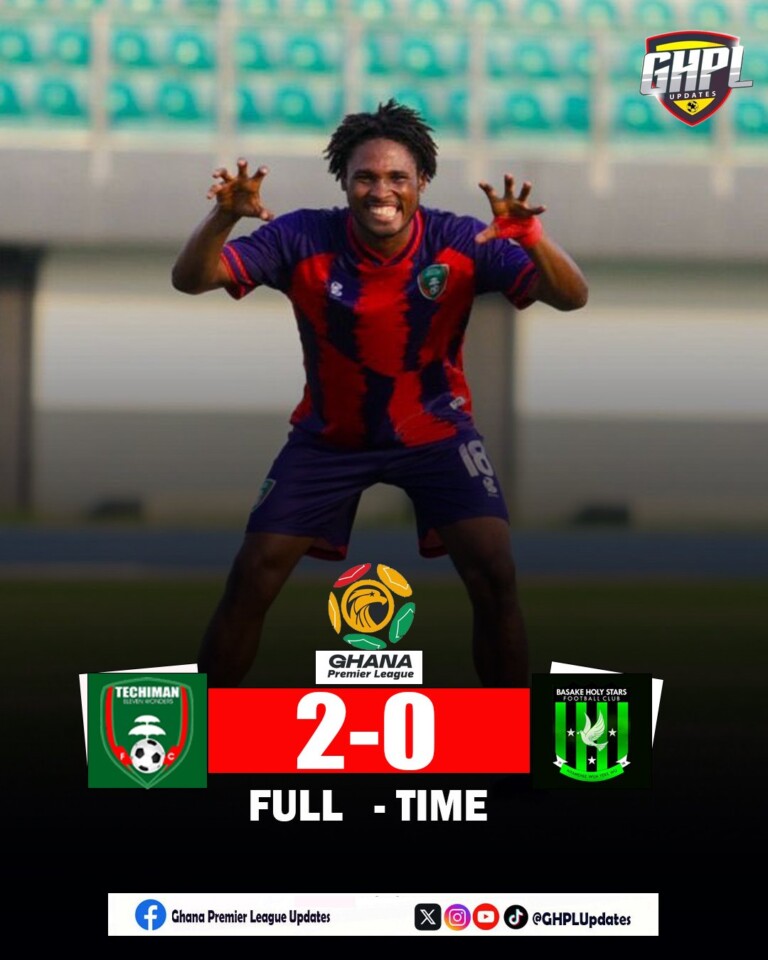
Bottom-placed Eleven Wonders launched the second round of the Ghana Premier League in emphatic fashion, claiming a crucial 2-0 victory over Basake Holy Stars on
The Ghana Export Promotion Authority (GEPA), a key partner of the upcoming 2025 Northern Business Fair, has announced plans to sponsor 30 women entrepreneurs to participate in the event.
The two-day fair, powered by Channel One TV and Citi FM, will take place at the Tamale Sports Stadium on Saturday, October 25, and Sunday, October 26, 2025.
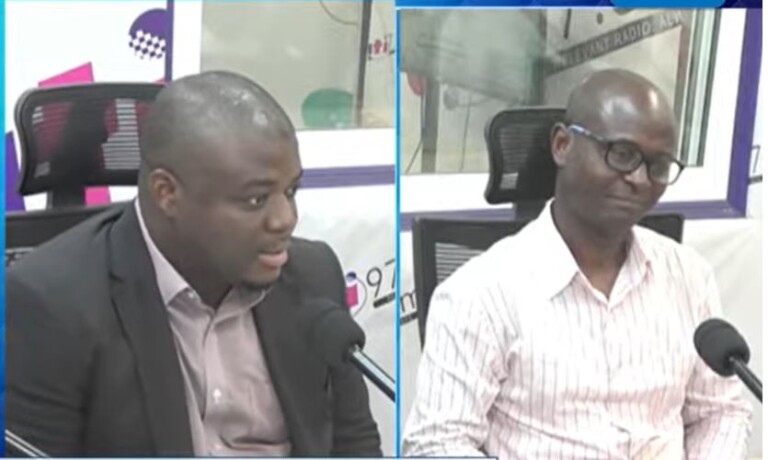
Speaking on the Citi Breakfast Show on Wednesday, October 22, Abdul Latif Mohammed, Deputy National Project Coordinator, said GEPA, through its BizBox project, is supporting over 30 young women from the northern part of the country to showcase their products at the maiden edition of the fair.
According to him, the initiative aims to give these women visibility and market exposure for their locally produced goods, which include food, cosmetics, and northern fabrics.
“Understanding the impact of creating visibility for the young people in the area, especially from the northern sector, where most often market activities like this are hosted down south. This particular one gives us the opportunity to also showcase what we have been doing with these young people. As partners, we would send in a minimum of 30 young women we have trained, and they are coming with products ranging from food and beverages, cosmetics, and northern fabrics, to tell what they can do,” he said.
He added that the fair would help participants build networks, secure business orders, and develop new income streams to grow their enterprises.
“They have been coached to create networks, build a pipeline of prosperity and also create orders for future business so they can create another line of income to support the growth of their business. They are cut across the northern region,” he added.
The Northern Business Fair 2025 is designed to position the Northern Region as a vibrant hub of commerce, creativity, and collaboration. It will serve as a one-stop marketplace for Made-in-Ghana products, showcasing innovation from SMEs, startups, research institutions, and indigenous brands across the Savannah, Northern, North East, Upper East, and Upper West Regions.
The event is proudly sponsored by Ecobank, Syde Hassle, the Ghana Enterprises Agency (GEA), and GEPA.

Deputy National Communications Director of the New Patriotic Party (NPP), Kamal-Deen Abdulai, has cautioned supporters of the party’s presidential hopefuls to be measured in their language as internal campaigns intensify.
His comments follow a meeting between former president Nana Addo Dankwa Akufo-Addo and the five presidential aspirants on Tuesday, October 22, 2025.
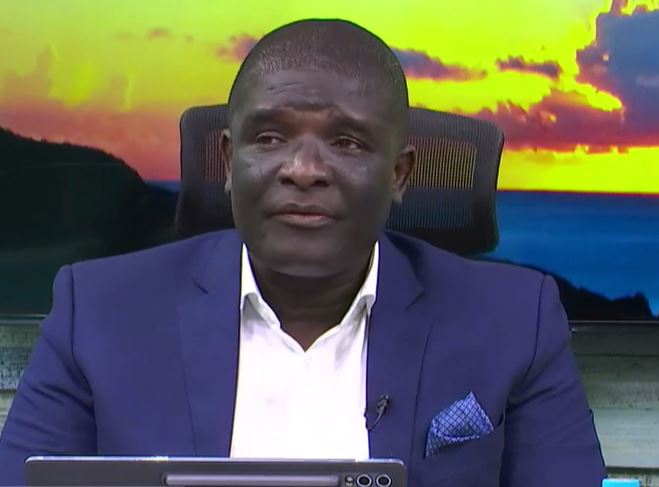
Speaking on Breakfast Daily on Channel One TV on Wednesday, October 22, 2025, Mr Abdulai, who described supporters as “more of the problem,” urged them to make utterances that would advance the party’s interests rather than resort to insults.
“We, the followers, are even more of the problem. If you feel you support someone, any language that you are going to bring out, let that language be towards the development of the party and help your candidate win it. The insults will not help,” he said.
He stressed that a clean and issue-based campaign would strengthen the NPP’s unity and position it for victory in the 2028 general elections.
“The castigating of each other will never help, and I think at the end of the day, when we all do this, we will all play a role in building the party and making sure that this 2028 that they see as a mirage for us will rather be the return point of the NPP,” he added.
Former president Nana Addo Dankwa Akufo-Addo convened the meeting with the aspirants and key party leaders to foster cohesion ahead of the January 31, 2026, presidential primaries. He urged the aspirants to run issue-based campaigns and maintain mutual respect.
In response, the five aspirants pledged to conduct their campaigns with decorum and to rally behind whoever emerges as flagbearer to ensure party unity after the primaries.

Lands and Mines Watch Ghana (LMWG) has defended the licensing of Bawa Rock Limited as an aggregator under the Ghana Gold Board (GoldBod) scheme, describing recent claims by the Minority Caucus in Parliament as misleading, politically motivated, and lacking industry context.
In a press statement issued in Accra on January 7, 2026, the watchdog group said while parliamentary oversight remained vital to democratic accountability, the Minority’s approach to the issue had generated “more heat than light” and risked undermining confidence in ongoing reforms within Ghana’s gold trading and mining sector.
LMWG stressed that Bawa Rock Limited was not a newly created entity positioned to exploit policy changes, but a long-established indigenous company with operational experience in Ghana’s extractive industry.
According to the group, the company had made deliberate investments in infrastructure, systems, and professional management aligned with international best practices in precious metals trading.
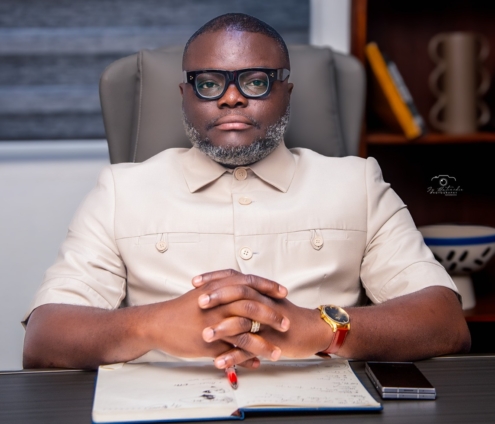
Addressing claims that Bawa Rock’s licence creates a monopoly, LMWG, led by Kwame Owusu Danso, Executive Director of Lands and Mines Watch dismissed the allegation as a deliberate distortion of the GoldBod framework.
The group explained that the GoldBod system provides for multiple licensed categories, including aggregators, self-financing aggregators, and tiered buyers, all operating under uniform pricing structures set by the state.
“Under the GoldBod framework, it is only the state agency itself that functions as a monopoly,” the statement noted, adding that no licensed private operator controls pricing or market access.
LMWG highlighted Bawa Rock’s investment in modern assaying and foundry infrastructure, noting that such capital-intensive investments improve accuracy in gold valuation, protect small-scale miners from underpricing, and enhance Ghana’s credibility on international gold markets.
The group emphasized that Bawa Rock’s licence was issued in accordance with the GoldBod Act, 2025 (Act 1140) and aligns with national objectives such as improved traceability, reduced smuggling, and strengthening of the formal gold purchasing system.
Criticizing the Minority’s continued public questioning of ownership structures and licensing criteria, LMWG described the approach as political theatre masquerading as oversight, warning that such rhetoric could discourage serious indigenous investment in the sector.
“Politicians must be allowed to do politics, but industry must be allowed to work,” the statement said, urging restraint and responsible engagement to safeguard reforms aimed at long-term value creation.
LMWG concluded that attacking indigenous companies without evidence weakens national reform efforts rather than strengthening accountability, and called on the Minority in Parliament to elevate public discourse and support initiatives that enhance transparency and sustainability in Ghana’s gold trading industry.
Source: GNA


The Institute for Democratic Governance (IDEG), a think tank focused on development and governance solutions, has warned that Ghana risks democratic backsliding if urgent constitutional reforms are not undertaken, citing prolonged delays in implementing long-proposed changes to the 1992 Constitution.
In a press statement issued on Wednesday, January 7, to mark Constitution Day and Ghana’s 34th consecutive year of constitutional rule, the Institute for Democratic Governance (IDEG) said more than a decade of stalled constitutional reform efforts had exposed deep structural weaknesses in Ghana’s democratic governance framework.
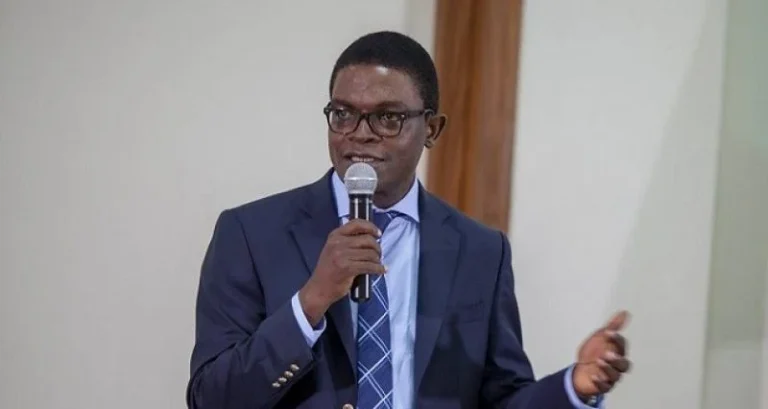
The statement signed by IDEG’s Executive Director, Dr Emmanuel O. Akwetey noted that successive governments over four electoral cycles, from 2012 to 2025, had been unable to implement recommendations arising from constitutional review processes, largely due to weak national consensus and the absence of a permanent, independent institutional framework to drive the reforms.
IDEG cautioned that the continued delay was occurring against a troubling regional backdrop marked by democratic regression in West Africa, declining confidence in multiparty democracy, rising public support for military rule, and growing youth disenchantment with what is perceived as an unresponsive political system.
“These trends collectively pose a serious threat to Ghana’s democratic consolidation and its long-standing role as a democratic anchor in the sub-region,” the statement said.
IDEG said the recent submission of the Constitution Review Committee’s report presented a critical opportunity to reset Ghana’s governance architecture and avert potential democratic decline.
The organisation commended President John Dramani Mahama for ensuring the immediate public release of the report, describing the move as a positive step towards transparency and inclusive reform.
The statement stressed that safeguarding Ghana’s democracy would require a broad national consensus, collective commitment to good governance, and a rejection of divisive politics.
It urged political leaders, civil society organisations, and citizens to draw lessons from previous failed reform attempts and recommit to implementing long-overdue constitutional changes.
IDEG added that without decisive action, public trust in democratic institutions could continue to erode, particularly among the youth, with far-reaching consequences for political stability and democratic governance in the country.
H. Kwasi Prempeh: Capping ministers unburdens President in appointments


Environmental Scientist, Prof. Chris Gordon, has raised alarm over Ghana’s water supply woes, attributing the persistent shortages in urban areas largely to ageing infrastructure, leakages, and deliberate sabotage of delivery systems.
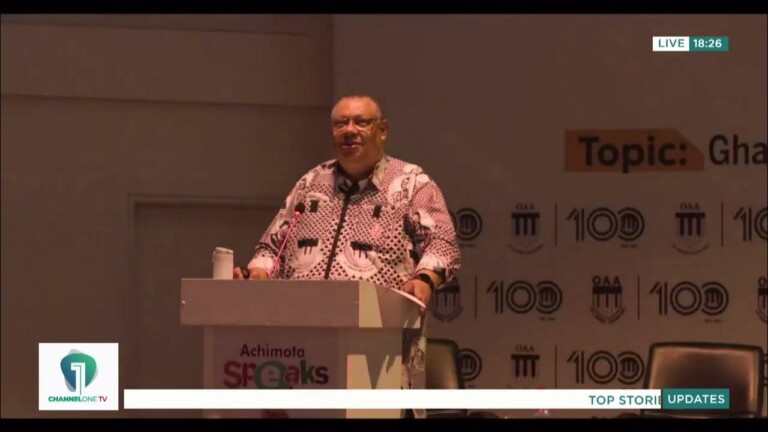
Speaking on the Citi Breakfast Show on Thursday, January 8, 2026, Prof. Gordon said that a significant portion of treated water never reaches consumers, making it difficult for Ghana Water Limited (GWL) to recover costs or expand services.
“My other concern is the whole issue of pricing. The cost of the infrastructure is very high; it is a major investment. But the major challenge in our infrastructure right now is the delivery pipes. Some are leaking,” he explained.
Citing sector data, he noted that large volumes of water are lost along transmission lines due to broken and deteriorated pipes.
“When you look at the data and statistics, you will realise that most of the water that leaves the water treatment plant gets lost along the way. They cannot be costed because no consumer picks it. It is just running out of broken pipes,” Prof. Gordon said.
Beyond technical faults, human interference is also worsening the problem, with some individuals deliberately damaging pipelines to access water for farming and other activities.
“People also deliberately break the pipes to gather water to irrigate their vegetable farms. So, replacing that infrastructure itself is a major investment,” he said, warning that such acts undermine efforts to address water shortages, especially in urban centres already grappling with intermittent supply.
“So, if we are deliberately sabotaging the efforts that are in place, it is not always the case that people are sitting in and not doing anything,” he added.
Prof. Gordon called for stronger public cooperation, enhanced enforcement, and increased investment in infrastructure to ensure a reliable and sustainable water supply across the country.
ATMA Plant shutdown disrupting water supply in Teshie, Nungua, Spintex – GWL