Home Blog Page 14

Transactional or Trade: GoldBod must admit it made losses

0

[ad_1]

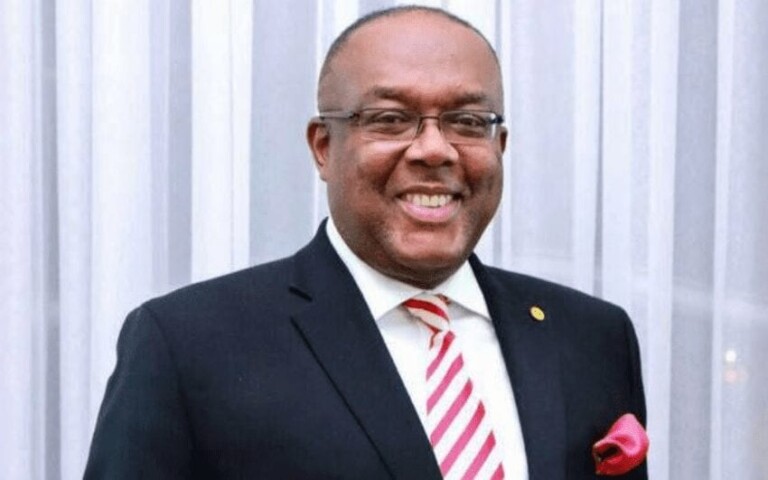
Policy Analyst and President of Policy Think Tank, IMANI Africa, Franklin Cudjoe has told the GoldBod and its managers that they cannot say they did not make losses.

He acknowledges that although the GoldBod sees itself as an intermediary between the aggregators and the Bank of Ghana the losses must be acknowledged whether transactional or trade.

However they are losses and there will be a need for explanations on how the losses were made and how thy intend to minimize it going forward.

”I can undersrand why GoldBod wouldn’t acknowledge that the losses should be classified as such on their books, because it thinks they are just playing an intermediate role between bank of Ghana and the aggregators of gold since it is the bank that provides the cedis for gold purchases and ultimately receives proceeds of gold sold abroad in dollars,” he stated in a social media post.

He stated further that “But they are losses, transactional or trade losses. $214m loss is large enough for us to understand how it occurred, the period it occurred and where they occurred ( as in with which buyers of our gold and the quantum of loss per buyer),- This helps in two ways- 1. In order to minimise them if they were genuinely incurred and to help prevent a gaming / rigging due to privileged information or as it is commonly called, insider information, regardless of whether the spot and onward sale price of gold are displayed by GoldBod. And l think the Bank of Ghana should provide answers to how the $214m loss happened and what they will do to miimise it in futuret transactions”.

[ad_2]
NDC Gov’t has taken lessons from Gold-For-Oil programme

0

[ad_1]

Policy Analyst, Franklin Cudjoe has commended the current government for taking lessons from the shortfalls of the Gold-for-oil programme during the previous regime.

He says these lessons are what is guiding the GoldBod in its operations.

On the losses of $214m made by the GoldBod he insist that the GoldBod cannot say they did not make any such losses.

He holds the view that it is a great loss which needs some explanation regardless of how the GoldBod sees it.

Read His Post Below

Having followed the Gold-for-Oil and GoldBod programmes, it is clear significant lessons have been learned by the current government in order not to repeat past mistakes. And GoldBod, the Bank of Ghana and the Finance Ministry deserve enormous commendation.

However, it is clear the way the current GoldBod system is structured there would always be tranasction losses as a result of the conversion of dollars to cedis and vice versa in the purchase of gold. I can undersrand why GoldBod wouldn’t acknowledge that the losses should be classified as such on their books, because it thinks they are just playing an intermediate role between bank of Ghana and the aggregators of gold since it is the bank that provides the cedis for gold purchases and ultimately receives proceeds of gold sold abroad in dollars.

But they are losses, transactional or trade losses. $214m loss is large enough for us to understand how it occurred, the period it occurred and where they occurred ( as in with which buyers of our gold and the quantum of loss per buyer),- This helps in two ways- 1. In order to minimise them if they were genuinely incurred and to help prevent a gaming / rigging due to privileged information or as it is commonly called, insider information, regardless of whether the spot and onward sale price of gold are displayed by GoldBod. And l think the Bank of Ghana should provide answers to how the $214m loss happened and what they will do to miimise it in futuret transactions.

My worry though is that it had to take the IMF to receive this information and then publish for us to knock our heads discusing what name to call it. Edefu! Enye koraa. ! Ehii koraa ! Not good!

[ad_2]

I’m ready to go global with my music

0

[ad_1]

Dancehall Artiste, Charles Nii Armah Mensah, known popularly as Shatta Wale, has hinted at going global with his music in 2026.

He says he has saved enough money and believes that he can now invest in taking his craft to the world stage.

Shatta Wale who made this known in a social media post, used the opportunity to invite CVs of individuals who can play contributory roles in achieving his dream.

His post read “I saved enough money to push my music Global and I think I am ready now .. If you want to join my team so we work together, start preparing your CV’s .. We are about to work smart this year”.

Over the years, he has been labelled a local champion because he has failed to invest heavily in his music videos and has also refrained from playing international shows.

Although he has had features with Beyonce and other acclaimed musicians, Shatta Wale, over the years did not take advantage of these features to be acclaimed globally.

[ad_2]

GES announces date for SHS reopening

0

[ad_1]

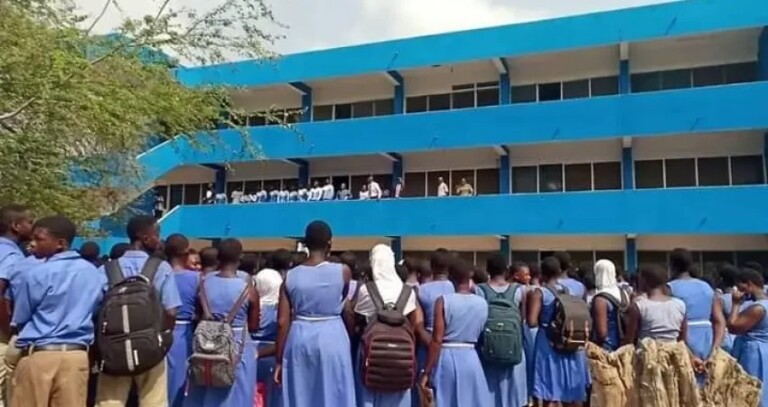
The Ghana Education Service (GES) has announced that the timetable for the various senior high schools remains the same. Per the statement issued by the GES, senior high schools are resuming on January 5, 2025. Form Ones and Twos are expected in school on January 5 and will break from February 27 to May 3rd. […]

[ad_2]

Why Skilled Ghanaians in the diaspora have been encouraged to return to their country

0

[ad_1]

Ghana’s Ambassador to the United States of America, Victor Smith, has urged skilled Ghanaians in the diaspora to come back home.

According to him, their skills are needed to help build the country.

He believes that their partnership with well-resourced business leaders in Ghana will help build industries, jobs, and a stronger nation.

Making this known in an address, he said, “Skilled Ghanaians in the diaspora 🇬🇭: partner with well-resourced business leaders, bring your expertise home, and help build industries, jobs, and a stronger nation.
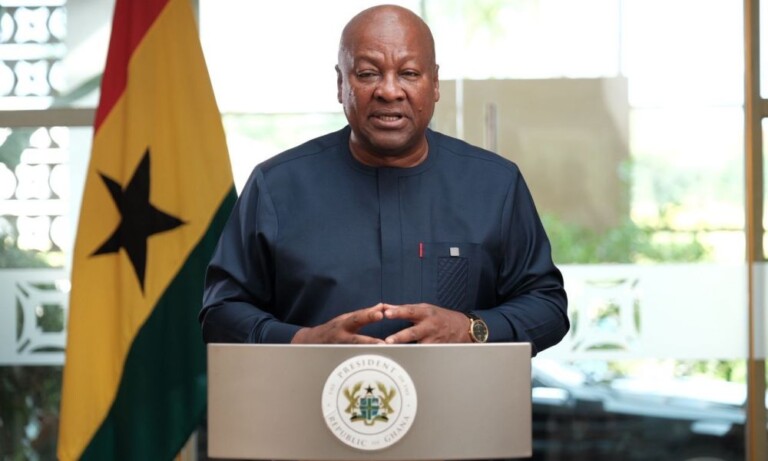
Ghana is calling. Let’s rise and build—together”.

[ad_2]

Mahama has done well but the real show would be seen in the next three years

0

[ad_1]

Vice President of IMANI Africa, Kofi Bentil has commended President John Dramani Mahama as he chalks his first term in office.

He however cautioned that Ghana’s recent economic improvements, while positive, remain limited and that the real challenges lie ahead.

Speaking on TV3’s Keypoints, Bentil described the change in the economy as “therapeutic,” even if the government had taken no action.

“Even if this government did nothing, the change itself was therapeutic. The real challenge is what happens in the next three years,” he said.

Bentil noted that although the Domestic Gold Purchase Programme (Goldbod) has achieved results, its impact on the cedi has been modest.

“Goldbod has done something, but the effect on the Cedi is less than 10 per cent… globally, the dollar has depreciated,” he explained. “It is not surprising; the challenges are what happen in the next three years.”

Highlighting Ghana’s dependence on gold exports, Bentil added, “Because Ghana’s exports are so dominated by gold, and exports are an important factor in exchange rate movements, we must bear in mind that gold prices rose over 70 per cent in 2025 alone.”

He also flagged concerns over budget allocations. “Its undisbursed 2025 budget allocation of US$279 million would last less than one year,” Bentil said.

[ad_2]

Leading NPP members quietly praise our success in government—Edudzi

0

[ad_1]

The Chief Executive Officer of the National Petroleum Authority (NPA) has disclosed that some leading members of the New Patriotic Party (NPP) are happy with the National Democratic Congress handling the country.

According to him, they only come out to make noise just because they have to engage in politics and cannot be seen singing the praises of their opponents.

“We talk to them quietly, and they tell you, Edudzi, what you have done to the dollar is something good. They tell us quietly, but they come out to make noise, and that is understandable in politics.

If you come and you are always singing the praises of President Mahama, who will consider you for anything? And so deliberately you can see the benefits to our people,” he said on TV3.

He noted that the change in government in 2024 was an imperative, as it has exposed the New Patriotic Party and has allowed for accountability in the country.

[ad_2]

Ghanaian and Nigerian film industries are ‘growing backward’

0

[ad_1]

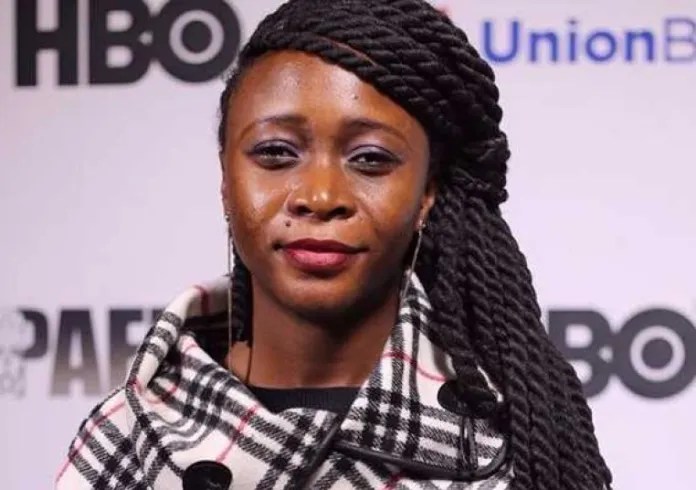
Award-winning filmmaker and director Leila Djansi has criticised the structural direction of the Ghanaian and Nigerian film industries, describing them as self-serving systems that prioritise individual gain over long-term creative growth.

In a late-night reflection shared after working across multiple time zones, Djansi said she observed a troubling pattern in both industries.

“The Ghanaian and Nigerian film industries have become structurally self-serving,” she stated.

She pointed to the dominance of individual YouTube platforms as evidence. “Every major player owning a plot of land on YouTube is evidence of this. Self-serving. Tribal-serving. Wealth-serving.”

According to Djansi, this structure has resulted in repetitive content driven by algorithms rather than artistic purpose.

“The result is repetitive genres optimised for algorithm survival, not cinematic longevity,” she said, adding, “Fast production. Fast turnover. No memory. No canon.”

She argued that such a system fails to build institutions or preserve creative heritage.

“That structure doesn’t build institutions, share libraries or lasting studios. It builds silos. That’s why they collapse inward.”

Djansi warned that without protection for craft, the industry will continue to decline. “There’s no protection for craft because it’s about individual survival. So the industries grow backward.”

[ad_2]

Story is king – Leila Djansi calls for system-based filmmaking

0

[ad_1]

Filmmaker Leila Djansi has called for a fundamental shift in how African film industries are organised, urging a move away from ego-driven production toward collective systems that prioritise storytelling.

Comparing Anglophone West African cinema to other global industries, Djansi noted that successful film ecosystems are built on structure, not personalities.

“Now look at Francophone Africa, East Africa, South Africa, Bollywood, Hollywood, Europe,” she said. “Those industries were not built around individuals. They were built around systems.”

She cited funding frameworks, guilds and development pipelines as key drivers of sustainability. “Systems that protect excellence and submit to story,” she explained in Facebook post sighted by MyNewsGh.

Djansi also criticised what she described as an obsession with Western validation. “Always looking to the West.

“Not for collaboration, but for validation. Not participation,” she said, mocking popular slogans such as “Ghana to the world” and “we’re on the map.”

According to her, true film excellence requires discipline and collective purpose. “Film excellence is not self-serving. It is collective. It disciplines ego. It delays gratification. It serves story,” she stated.

She concluded by reaffirming her guiding principle as a filmmaker: “Because ultimately, story is king.”

Djansi ended her reflection by outlining her personal focus for the year ahead: “My 2026 is for faith, film, food and family.”

[ad_2]

He ran away – Dzifa Gunu slams Oppong Nkrumah for dodging Goldbod defence

0

[ad_1]

Public relations specialist and staunch NDC member Dzifa Gunu has challenged claims made by Minority spokesperson Kojo Oppong Nkrumah on the controversy surrounding Goldbod, insisting that the former Information Minister failed to back his allegations when given the opportunity to do so.

In a Facebook post reacting to the ongoing debate and sighted by MyNewsGh, Dzifa stated, “Let it be known that Kojo Oppong Nkrumah was invited to News File to defend his claim against Goldbod, he chickened out.”

Her comment places direct focus on credibility and accountability, questioning why a public official who raised serious allegations would avoid a platform designed for public scrutiny.

Dzifa’s remarks come against the backdrop of growing political tension over concerns raised by the Minority caucus about Goldbod’s operations.

At a press conference held on Monday, December 29, the Minority alleged that the state may have lost hundreds of millions of dollars, with the losses potentially tied to environmental breaches and illegal mining activities.

Addressing the media at the time, Kojo Oppong Nkrumah warned that the arrangement under scrutiny could be facilitating the purchase of illegally mined gold.

“There are environmental issues that have to be dealt with,” he said, arguing that urgent action was needed to prevent public funds from supporting unlawful mining.

The Minority further claimed that existing gaps in oversight had created room for abuse. “As of now, we have every reason to believe that state money is being used to buy galamsey gold,” Oppong Nkrumah stated, adding that the caucus would push for immediate regulatory intervention.

He outlined proposed measures including a suspension of permits within forest reserves and the introduction of stronger traceability systems to track gold sources.

According to him, weaknesses in transparency within the current framework have contributed to environmental damage and financial risk to the state.

It is within this context that Dzifa Gunu’s intervention shifts the focus from the substance of the allegations to the responsibility of those making them.

By pointing out Oppong Nkrumah’s absence from News File, a programme known for rigorous public debate, Dzifa framed the issue as one of accountability, arguing that serious claims demand public defence, not press conference soundbites.

[ad_2]