Home Blog Page 43

Constitutional Review Committee proposes five-year Presidential term

0

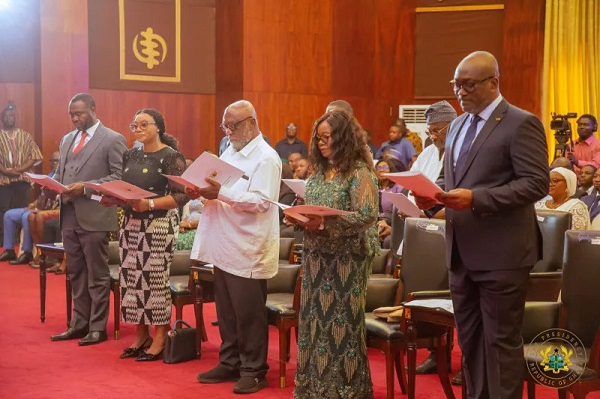
The Constitutional Review Committee has recommended extending Ghana’s presidential term from four to five years, arguing that the current tenure does not allow sufficient time for governments to implement policies effectively.

Presenting the report to President John Dramani Mahama at Jubilee House on Monday, December 22, 2025, Committee Chairman Professor Henry Kwasi Prempeh emphasised that the proposal is aimed at enhancing governance efficiency and deliberately excludes any provision for a third term.

“We couldn’t find a place for a third-term; there was no demand for it, and nobody seemed to support it including President Mahama,” he said.

LIVESTREAMING: Constitution Review Committee presents final report to President Mahama

The Committee also noted that a significant portion of a four-year presidential term in Ghana is often lost to administrative transitions and electioneering.

Professor Prempeh explained, “The President spends about six months settling into office and nearly a year campaigning.”

To tackle, the Committee recommended regulating campaign seasons to reduce prolonged political activity and allow governments adequate time to govern.

The Committee’s mandate was to review and resolve challenges from previous constitutional reviews, particularly those of the 2010 Constitution Review Commission and the 2023 Constitution Review Consultative Committee.

Compiled over several months, the final report contains proposed amendments to Ghana’s 1992 Constitution aimed at strengthening governance, promoting citizen participation, and addressing key national issues.

Meanwhile, the President is expected to outline the next steps for implementing the recommendations, marking a significant moment in Ghana’s democratic process.

BoG Governor Announces Forward-Looking, Risk-Based Banking Supervision from 2026

0

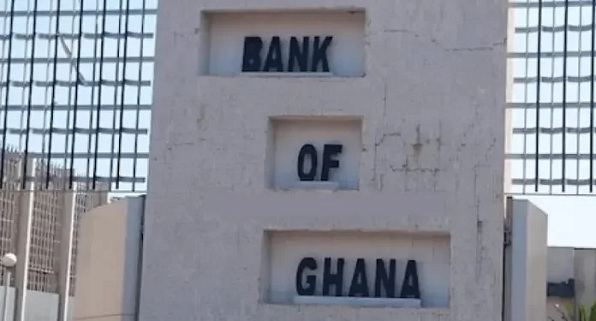
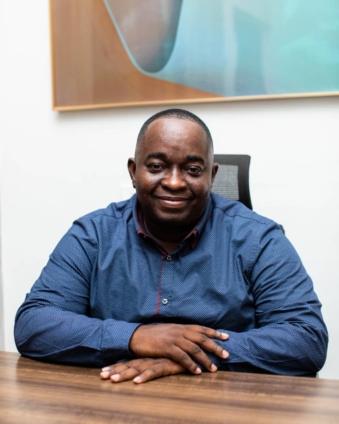
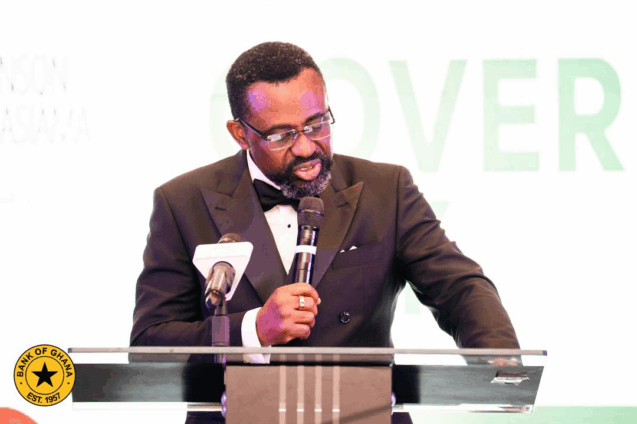
Bank of Ghana (BoG) Governor, Dr Johnson Asiama, has announced that banking sector supervision will adopt a more forward-looking and risk-based approach starting in 2026, aimed at strengthening financial stability and promoting responsible credit expansion.

Speaking at the Governor’s Day Programme organised by the Chartered Institute of Bankers, Dr Asiama explained that the new framework will enable more precise differentiation among banks, enhanced governance, improved risk management, and the rebuilding of capital buffers—creating space for institutions to grow credit responsibly.

“Credit growth will matter, but credit quality will matter more,” he emphasized, adding that supervision will focus on intermediation quality, underwriting discipline, sectoral concentration, cash-flow analysis, and risk pricing.

Strengthening Governance
Dr Asiama stressed that governance will remain a core pillar of financial stability, with greater accountability for boards and senior management, including oversight of risk appetite, internal controls, and outcomes.

Enhanced Bank Relationships
The Governor also highlighted reforms to improve the BoG’s engagement with banks, including clearer regulatory guidance, streamlined internal processes, and more predictable timelines for approvals—even as supervision becomes more rigorous.

Markets and Digital Infrastructure
On financial markets, attention will shift from recovery to depth, diversification, and mobilisation of long-term capital, while payments, settlement systems, data standards, and digital infrastructure will remain strategic priorities.

“Faster settlements, richer transaction data, interoperable platforms, and stronger fraud controls will increasingly define competitiveness and resilience,” Dr Asiama noted.

Commercial Dispute in Nigeria Raises Concerns Over Ghana-Nigeria Economic Ties

0

A commercial dispute in Abuja, Nigeria, involving Ghanaian-owned River Park Estate, managed by Dr Sam Jonah, has sparked concerns about the potential impact on bilateral economic relations between Ghana and Nigeria. The case, currently before a Nigerian court, has prompted calls for urgent intervention to safeguard Ghana’s business interests abroad.

Allegations that the company’s operations have been affected despite ongoing litigation have raised questions about judicial fairness and institutional conduct. Analysts stress that such incidents, if left unaddressed, could undermine investor confidence and affect the credibility of cross-border commerce.

“This moment calls for decisive engagement by the Government of Ghana. Protecting Ghanaian businesses abroad is not confrontation—it is about preserving investment credibility,” said Yaw Barima, a business analyst.

Mr. Barima noted that Nigeria has long benefited from the stability and fairness of Ghana’s legal environment, which has enabled Nigerian enterprises to flourish within Ghana. He stressed that this goodwill is not inexhaustible.

“Nigerian businesses operating in Ghana have a responsibility to advocate for due process. Silence risks allowing perceptions of injustice to harden,” he added.

The analyst warned that unchecked disputes could have wider repercussions, potentially shaping public sentiment, influencing regulatory actions, and straining economic relations between the two nations.

“Ghana and Nigeria are economically interdependent. Ensuring justice abroad is not just a matter of principle—it is pragmatic economics. When justice appears selective, commerce becomes fragile. The lesson is clear: how justice is administered at home carries consequences abroad,” Mr. Barima said.

Jonathan ‘Worldwide’ Tetteh Stuns Freezy Macbones to Claim WBA Africa Light Heavyweight Title

0

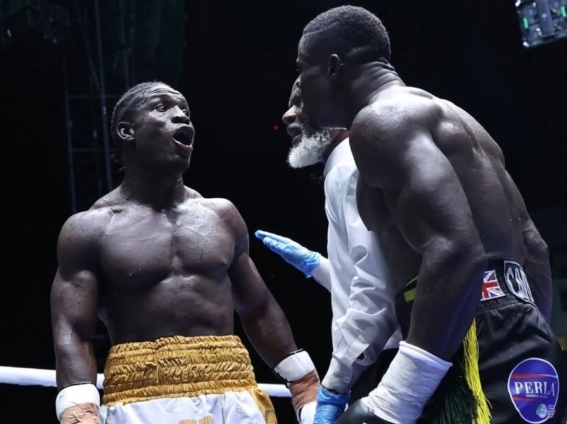
In a night of drama, skill, and controversy, Jonathan ‘Worldwide’ Tetteh pulled off a stunning upset over Seth Gyimah (Freezy Macbones) to claim the WBA Africa Light Heavyweight title on Saturday at the University of Ghana Stadium.

The “Legacy Rise” event transformed the arena into a cauldron of excitement, with H.E. John Dramani Mahama in attendance as the Special Guest of Honour, lending national prestige to the historic evening. The undercard, organized by Mahama’s son, Sharaf Mahama, set the stage for a finale few in the 10,000-strong crowd had predicted.

The UK-based Freezy Macbones entered the ring as the heavy favourite. However, the 36-year-old appeared affected by months of psychological warfare and strategic mind games orchestrated by his 25-year-old challenger.

Fight Highlights:

  • Rounds 1-2: Tetteh displayed exceptional hand speed and aggression, catching Macbones off guard.
  • Rounds 3-6: Macbones’ experience showed as he landed sharp jabs and punishing body shots, seemingly gaining control.
  • Round 7: Tetteh relied on clinching to manage fatigue, weathering Macbones’ attacks.

The climax came in Round 8, when Tetteh suddenly collapsed, claiming that Macbones had bitten his shoulder during a heated exchange. The referee acted swiftly, deducting points from Macbones for unsportsmanlike conduct—a decision that ultimately proved decisive.

When the final bell rang, the verdict was a unanimous decision in favour of Jonathan Tetteh, leaving the stadium in stunned silence before erupting into celebration.

  • Jonathan Tetteh: Remains unbeaten (11-0, 11 KOs)
  • Freezy Macbones: Suffers his first career defeat (11-1)

Tetteh’s victory marks a milestone in his career, cementing his rise as a formidable force on the continental stage, while Macbones was left to reflect on a costly moment of frustration that may have cost him the title.

Mahama Ayariga Refrains from Commenting on Bawku Chieftaincy Dispute to Protect Peace

0

The Majority Leader and Leader of Government Business in Parliament, Mahama Ayariga, has affirmed that he will not allow himself to be drawn into public commentary on the ongoing Bawku chieftaincy dispute.

Speaking at the closing ceremony of the Third Meeting of the First Session of the Ninth Parliament on Friday, Mr Ayariga, who is also the MP for Bawku Central, explained that his deliberate silence was intended to prevent escalating tensions while the mediation team led by Otumfuo Nana Osei Tutu II engaged with key stakeholders to resolve the conflict.

“My restraint is a conscious effort to safeguard peace in Bawku,” he said, adding that he had intentionally stayed away from his constituency to avoid making statements that could inflame passions or worsen the situation.

Mr Ayariga emphasized his commitment to ensuring that parliamentary business remains focused on national development, while sensitive local matters are handled through proper mediation channels.

The Otumfuo Nana Osei Tutu II mediation team recently reaffirmed Asigri Abugurago Azoka II as the legitimate Bawku Naba and recommended that rival chief Seidu Abagre be recalled to Nalerigu for another traditional role. The team also called on the government to support the enforcement of peace.

While the Mamprugu Overlord (Nayiri) rejected the report, the Ghanaian government officially accepted the recommendations as a framework for reconciliation in the troubled area.

Ghana Army Celebrates Unity, Professionalism and Security Gains at 2025 WASSA Event

0

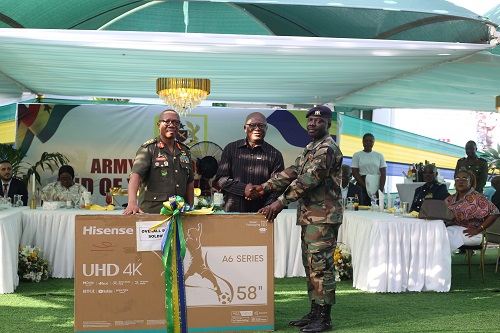
Senior officers of the Ghana Army have underscored unity, professionalism, and operational achievements during the 2025 West African Soldiers Social Activities (WASSA) held at Army Headquarters in Accra.

The Guest of Honour, former Chief of Army Staff, Major General (rtd) William Azure Ayamdo, described WASSA as a deeply symbolic end-of-year tradition that continues to strengthen camaraderie within the force.

“WASSA has always been an integral part of our year-end rituals, and I am particularly pleased that this age-old practice has been sustained,” he said.

Reflecting on the Army’s progress, Major General Ayamdo praised improvements in human resource management, infrastructure, training, logistics, and troop welfare, noting that these efforts have enhanced the Ghana Army’s professional posture and operational effectiveness.

On national security, he highlighted Ghana’s relative stability in a volatile region as the outcome of sustained vigilance and strategic deployments, particularly along the northern borders, which have mitigated extremist threats.

He further commended the Army’s expansion efforts, including the establishment of new units, infrastructure projects, and forward operating bases, which have bolstered both troop welfare and operational reach.

“This is the best time to be a soldier in Ghana,” he remarked, drawing applause from attendees.

Major General Ayamdo also emphasized the importance of training, discipline, and fitness, praising the reintroduction of physical fitness tests and large-scale exercises as essential to readiness. He acknowledged the support of civilians, international partners, and the commendable performance of Ghanaian troops in global military competitions.

The event also served to honour fallen peacekeepers who paid the ultimate price in the service of global peace.

Speaking at the gathering, Chief Staff Officer at Army Headquarters, Brigadier General Lloyd Atror, highlighted WASSA as an opportunity for personnel to reflect on the year’s achievements, celebrate successes, and strengthen bonds among officers and soldiers.

“The purpose of this gathering is to come together, interact, reflect on the hard work and successes of 2025, and to make merry,” Brigadier General Atror said.

He also credited the leadership of Chief of Army Staff, Major General Lawrence Gbetanu, for the Army’s accomplishments over the year, noting that his guidance was pivotal to the force’s operational and organisational success.

Elon Musk Hits $749bn as Court Restores Historic Tesla Stock Options

0

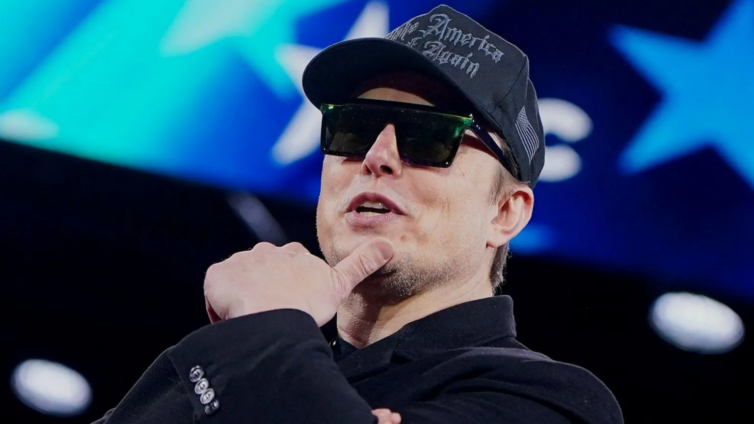
Tesla CEO Elon Musk’s net worth surged to $749 billion on Friday, following a landmark ruling by the Delaware Supreme Court reinstating Tesla stock options valued at $139 billion that were voided last year, according to the Forbes Billionaires Index.

The decision restores Musk’s 2018 compensation package, initially valued at $56 billion before Tesla’s rapid market growth. A lower court had overturned the deal in 2024, calling it “unfathomable,” but the Supreme Court deemed that ruling improper and inequitable.

This marks a major legal and financial victory for Musk, overturning a two-year setback that had temporarily stripped him of one of the largest executive pay packages in history.

Earlier in the week, Musk had become the first individual ever to surpass $600 billion in net worth, fueled largely by reports of a potential SpaceX IPO. Analysts expect the public listing of the aerospace company to further expand his fortune, given SpaceX’s dominance in satellite launches and space technology.

In November, Tesla shareholders approved a $1 trillion compensation plan for Musk, the largest ever endorsed by investors, reflecting confidence in his vision to transform Tesla into a global leader in AI and robotics.

With the restored stock options included, Musk’s wealth now outstrips Google co-founder Larry Page by nearly $500 billion, solidifying his position as the world’s richest individual.

The ruling highlights Musk’s unparalleled influence on executive compensation, corporate strategy, and modern wealth accumulation, further cementing his legacy as a transformative figure in business history.

Bank of Ghana Targets Sharp Cut in Bad Loans, Sets 10% NPL Goal for 2026

0

Governor of the Bank of Ghana (BoG), Dr Johnson Asiama, has announced that the central bank is pursuing an aggressive plan to reduce the country’s Non-Performing Loan (NPL) ratio to 10 per cent by the end of 2026, down from the current level of 19.5 per cent recorded in October 2025.

The Governor said the target is part of a wider strategy to strengthen asset quality across the banking sector, particularly as macroeconomic conditions improve and interest rates begin to decline.

Dr Asiama made the disclosure while delivering a keynote address at the Governor’s Day Annual Bankers’ Dinner, organised by the Chartered Institute of Bankers.

He explained that the easing economic environment should allow banks to restructure loans more intelligently, while still maintaining strict prudential standards.

“As we turn toward 2026, the central question is no longer whether stability can be restored,” he said. “The question is how that stability is used.”

He added that while 2025 marked the rebuilding of confidence, the focus for 2026 must be on deploying that confidence productively and responsibly to support a more competitive Ghanaian economy.

Call for Stronger Export Financing

Beyond banking sector stability, Dr Asiama urged commercial banks to take a more proactive role in supporting Ghana’s export-led growth agenda.

He called on banks to expand export finance desks, deepen support for agro-processing and non-traditional exports, and actively engage opportunities under the African Continental Free Trade Area (AfCFTA).

According to him, banks must move beyond domestic lending and help businesses transition into regional and global markets by financing export-oriented enterprises and managing trade-related risks.

“The banking sector must not sit on the sidelines of Ghana’s export agenda but help shape it,” he stressed.

He encouraged banks to design export-ready loan products, build industry-specific expertise, support hedging and risk-sharing instruments, invest in digital trade platforms, and assist exporters from production through to payment.

“When banks nurture exporters, they are not doing charity,” he noted. “They are expanding the country’s foreign exchange base, strengthening their own balance sheets, and reinforcing the resilience of the financial system.”

2025: A Year of Hard Choices

Reflecting on the past year, Dr Asiama described 2025 as a period defined by difficult but necessary decisions, taken at a time when confidence in policy signals and coordination had significantly weakened.

“When I assumed office, the challenge was not a shortage of ideas or tools,” he said. “It was the erosion of confidence.”

He explained that market behaviour at the time was driven more by uncertainty than conviction, making it difficult for even sound policies to gain traction.

Impact of Reforms

Dr Asiama highlighted a series of reforms implemented in 2025, which he said were instrumental in restoring discipline to both monetary policy and the financial markets.

He revealed that inflation, which exceeded 23 per cent at the beginning of the year, declined steadily into single-digit territory by November, reaching levels last seen in 2019.

Over the same period, the cedi appreciated by more than 20 per cent, a development he attributed to restored market order rather than speculative activity.

He added that sustained disinflation enabled the Monetary Policy Committee (MPC) to reduce the policy rate by a cumulative 1,000 basis points during the year—an outcome he said would not have been possible without firm policy discipline.

Strengthening the Banking Sector

The Governor noted that the reforms extended beyond monetary policy to the commercial banking sector, which entered 2025 still recovering from the effects of the Domestic Debt Exchange Programme (DDEP) and capital adequacy challenges.

At the end of 2024, 11 banks were operating below the required capital thresholds. By November 2025, that number had fallen to five, reflecting recapitalisation efforts, tighter supervision and improving economic conditions.

Dr Asiama also disclosed that the Bank of Ghana is laying the groundwork for the next phase of financial sector growth, aimed at long-term resilience and expansion.

He announced the completion of the National Payment Systems Strategy (2025–2029), which provides a coordinated roadmap for interoperability, cybersecurity, instant payments and modernisation of Ghana’s payments infrastructure.

According to him, the strategy positions Ghana’s financial system to better support economic growth in the years ahead.

Trump Administration Begins Review That Could Open Door for Nvidia AI Chip Sales to China

0

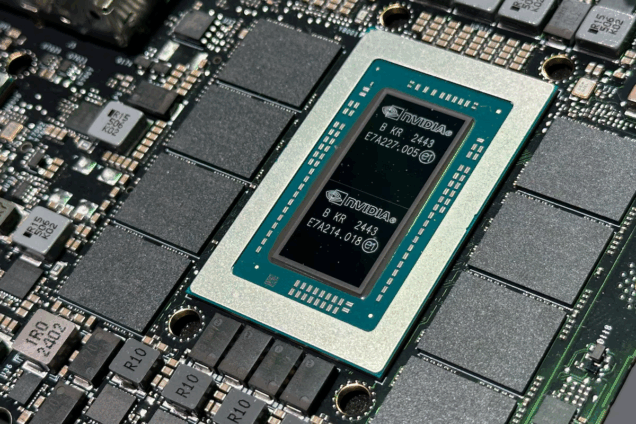
The administration of U.S. President Donald Trump has initiated an inter-agency review that could pave the way for the first exports of Nvidia’s H200 artificial intelligence chips to China, according to five sources familiar with the matter. The move follows Trump’s recent pledge to permit the controversial sales under a new framework.

Earlier this month, President Trump announced that his administration would allow Nvidia to sell its H200 chips, the company’s second-most powerful AI processors, to Chinese buyers, subject to a 25 percent government fee. Trump argued that the decision would help American technology firms maintain their global lead by reducing demand for Chinese-made alternatives.

The announcement immediately triggered criticism from lawmakers and policy experts across the U.S. political spectrum who warn that supplying advanced AI hardware to China could enhance Beijing’s military capabilities and weaken Washington’s technological edge.

Despite Trump’s public stance, uncertainty has lingered over how quickly the sales could be approved and whether Chinese authorities would permit domestic companies to proceed with purchases.

Sources say the U.S. Commerce Department, which oversees export controls, has now forwarded Nvidia-related license applications to the Departments of State, Energy, and Defense for formal review. Under export regulations, those agencies have 30 days to assess the applications and submit their recommendations.

An administration official stressed that the process will be comprehensive and not symbolic, noting that national security considerations will be central to the review. However, under U.S. law, the final authority on export approvals rests with the president.

Neither the Commerce Department nor Nvidia responded immediately to requests for comment. A White House spokesperson declined to address the specifics of the review but said the administration remains committed to protecting U.S. technological leadership while safeguarding national security interests.

The move marks a sharp shift from policies under former President Joe Biden, whose administration imposed sweeping restrictions on advanced AI chip exports to China and other countries seen as potential intermediaries. Those measures were justified by concerns that sensitive technologies could be diverted for military use.

Trump’s approach also represents a reversal from his first term, when he aggressively curtailed China’s access to U.S. technology, citing allegations of intellectual property theft and military exploitation—claims China has repeatedly denied.

Critics remain unconvinced. Chris McGuire, a former National Security Council official under President Biden, described the potential exports as a serious strategic error, arguing that advanced chips remain a key constraint on China’s AI ambitions.

Others within the Trump administration disagree. Officials led by White House AI adviser David Sacks contend that controlled exports could actually slow China’s domestic chipmakers, including Huawei, by keeping them dependent on U.S. technology rather than accelerating indigenous alternatives.

Meanwhile, Nvidia is reportedly considering increasing production of the H200 chip after strong interest from Chinese buyers exceeded current manufacturing capacity. Although less powerful than Nvidia’s latest Blackwell chips, the H200 remains widely used in advanced AI applications and has never previously been approved for sale to China.

Trump had earlier explored allowing exports of a scaled-down version of the Blackwell chips but ultimately opted to open discussions around the H200 instead, positioning it as a compromise between commercial opportunity and national security concerns.

‘The Wire’ Actor James Ransone Dies at 46; Medical Examiner Cites Apparent Suicide

0

Actor James Ransone, best known for his role as Ziggy Sobotka in the acclaimed television series The Wire, has died at the age of 46. According to the Los Angeles County Medical Examiner, his death on Friday is being treated as an apparent suicide.

Ransone, a native of Maryland, also gained widespread recognition for portraying Eddie Kaspbrak in the horror film It: Chapter Two. Over a career spanning more than two decades, he built a reputation as a versatile character actor across television and film.

His television credits included notable appearances in Generation Kill and Bosch, with his final on-screen role coming in Season 2 of Poker Face, which aired in June, according to The Movie Database. In film, Ransone appeared in the Sinister franchise, Tangerine, Mr. Right, and The Black Phone series.

In a 2016 interview with Interview magazine, Ransone spoke candidly about the personal struggles that shaped his early life. He described adolescence as a difficult period, saying he struggled to fit in at traditional public schools. His mother later enrolled him in an arts school, a decision he credited with changing his life.

“I think it saved me as a kid,” he said. “Going to arts school saved me.”

Ransone later attended film school in New York but admitted that he dropped out due to poor attendance. He spent several years navigating small acting roles while also playing music, at one point considering a career as a musician before committing fully to acting.

He also spoke openly about his battle with substance abuse, revealing that he spent several years addicted to heroin before achieving sobriety in his late twenties. He described his work on Generation Kill as a turning point, both personally and professionally.

The experience held special meaning for Ransone, whose father was a Vietnam War veteran. Being around young Marines during the production, he said, helped him better understand his father’s past and reshaped how he viewed his own life.

“It didn’t do so much for my career, but it shaped me and the way that I think about my life,” he said.

James Ransone is survived by his wife, Jamie McPhee, and their two children. His representatives did not immediately respond to requests for comment.

If you or someone you know is struggling, mental health professionals encourage seeking help from local support services or crisis hotlines.

TalentzMedia
info@talentzmedia.com
YouTube
YouTube
LinkedIn
Share
Instagram
Telegram
WhatsApp
FbMessenger
talentzmedia
talentzmedia
URL has been copied successfully!