MFWA backs govt’s plan to replace TV licence with public media levy
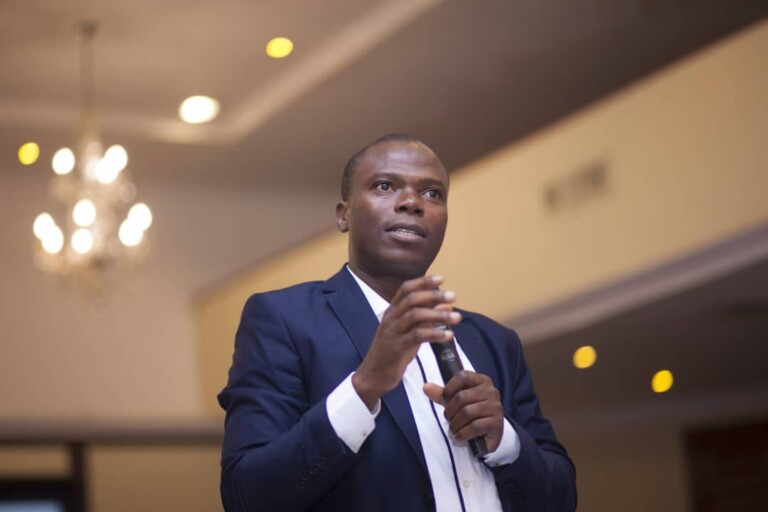
The Executive Director of the Media Foundation for West Africa (MFWA), Sulemana Braimah, has expressed support for the government’s proposal to replace the current TV licence regime with a public media levy.
President John Dramani Mahama, during a visit to the Ghana Broadcasting Corporation (GBC) on Thursday, January 8, disclosed that Cabinet is considering reforms to the country’s TV licence law, with plans to submit proposed amendments to Parliament.
According to the President, the proposed reforms seek to replace the existing TV licence system with a public media levy aimed at improving and sustaining funding for public broadcasting institutions.
Speaking on Eyewitness News on Thursday, January 8, 2026, Mr. Braimah noted that the current TV licensing framework has proven difficult to enforce, largely due to challenges associated with its structure and implementation.
“Laws are made to work, but sometimes implementation becomes a challenge. In the case of the TV licensing law, enforcement has been the major problem,” he said.
He argued that a public media levy, if properly designed and legislated, could better serve the national interest by revitalising the Ghana Broadcasting Corporation.
“If we have legislation that serves a critical public interest, such as revamping GBC, I think it would work. Continuing to rely on the TV licensing mechanism presents challenges with collection and enforcement. The approach being considered by the presidency could therefore be a viable alternative,” he added.
The TV licence in Ghana is a legal fee introduced under the Television Licensing Act, 1966 (NLCD 89) that requires individuals and entities that own or use television receiving sets to pay an annual fee to the Ghana Broadcasting Corporation (GBC).
The primary purpose of the TV licence fee is to support public service broadcasting by generating revenue for the GBC independent of government budgets and commercial advertising.
Nurudeen Amadu explains Karela United’s cautious approach to January signings

Karela United head coach Nurudeen Amadu has revealed the challenges facing the club in the current transfer window, explaining why reinforcements may be limited despite the desire to strengthen the squad.Speaking ahead of Sunday’s league clash against Aduana FC, Amadu stressed that quality, not quantity, will…
Ho: Gun amnesty tour ends with peace health walk
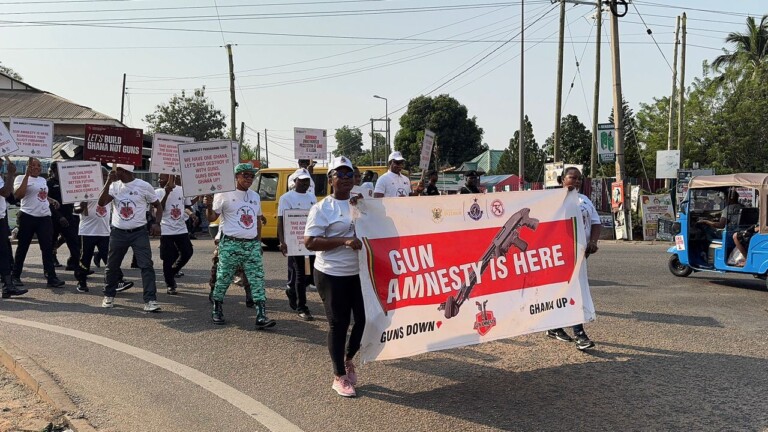
The Gun Amnesty Programme Train, which has been engaging communities across the Volta Region to create awareness on the need for citizens to voluntarily surrender illicit firearms, has climaxed its regional activities with a Health Walk in Ho.
The sensitisation tour, which began on Tuesday, formed part of nationwide efforts to educate the public on the objectives and benefits of the Gun Amnesty Programme and to encourage the surrender of unauthorised firearms without fear of arrest or prosecution within the amnesty period.
The health walk, held in the early hours of Thursday, January 8, was aimed at deepening public awareness in Ho and the Volta Region at large, while demonstrating the collective commitment of state institutions and stakeholders to peace and security.
Participants in the walk included personnel from all allied security agencies, some District Chief Executives (DCEs), heads of departments from the Volta Regional Coordinating Council (VRCC), the Clergy, traditional leaders, members of the media, and other individuals.
Addressing participants at the end of the walk, Dr. Adam Bobaa re-echoed the urgent need for individuals in possession of illicit firearms to surrender them before the expiration of the amnesty period.
He explained that the programme was designed to reduce the proliferation of small arms and light weapons, which posed serious threats to public safety and national security.
Alhaji Mohammed Avona Akape also urged all security personnel and participants to serve as ambassadors of the Gun Amnesty Programme by spreading the message in their respective communities.
He reaffirmed the commitment of the Volta Regional Coordinating Council to ensure that all illicit firearms within the region were surrendered, adding that collective responsibility was key to the success of the initiative.

Mr. Jerry Ameko, District Chief Executive of Adaklu and Dean of Municipal and District Chief Executives (MDCEs) in the Volta Region, said all MDCEs would intensify public education in their districts.
He noted that as heads of the Municipal and District Security Committees (MUSEC and DISEC), MDCEs would ensure the message reached every community to enable citizens to comply fully with the amnesty directive.
Heads of the various security agencies present also encouraged residents to take advantage of the amnesty window to surrender illicit firearms, warning that failure to do so could result in arrest and prosecution after the amnesty period.
The Gun Amnesty Programme is expected to contribute significantly to peacebuilding, crime prevention, and the creation of a safer environment for socio-economic development in the Volta Region and beyond.
Source: GNA
Karela United coach pleased with progress ahead of Aduana showdown

Karela United head coach Nurudeen Amadu says he is encouraged by his team’s gradual improvement as they prepare to face Aduana FC in Sunday’s Ghana Premier League fixture.The matchweek 18 encounter comes at a time when both sides are seeking momentum, albeit from contrasting recent experiences….
2026 Budget: Ato Forson failing to release funds – Haruna Mohammed
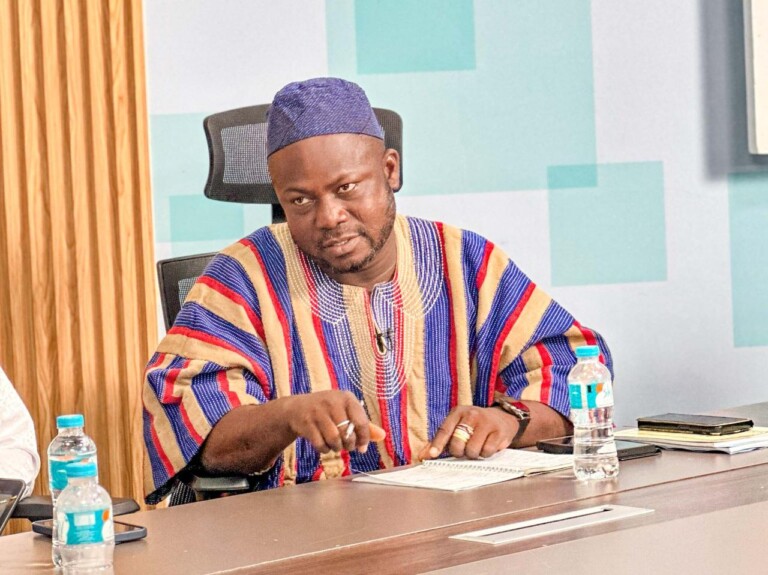
The Deputy General Secretary of the New Patriotic Party (NPP), Haruna Mohammed, has accused the government of undermining budget implementation by failing to release approved funds to key sectors.
Speaking on Channel One TV’s weekend news analysis programme, The Big Issue, Haruna Mohammed argued that many government programmes are stalled not because of poor planning, but due to what he described as the Finance Minister Ato Forson’s inability to release allocated resources.
According to him, although budgets are approved by Parliament, ministries, departments, and agencies are unable to carry out their mandates because the necessary funds are not disbursed.
He stressed that this has weakened economic governance, slowed development, and limited the impact of government policies on the lives of ordinary Ghanaians.
Haruna Mohammed added that the situation has affected key sectors of the economy, including agriculture, where farmers continue to struggle despite official claims of economic improvement.
“Inflation has come down. Does it have a replicate effect in the pocket of the people of Ghana? Has the charge on rent changed? If there is some level of resemblance in the reduction of prices within the market sector, what is the value? And what is the cost to the people of Ghana?
“Check the farmer, no farmer is laughing today, I am a farmer myself. No farmer will tell you that if they are able to sell their produce, they will be able to go back and farm the same acreage. Because there is bad economic governance. There is no direction, there is no improvement. Budget allocation cannot be met because the Finance Minister will not release the resources,” he said
‘This is our first victory’ – Samuel Eto’o urges Cameroon to rise after controversial AFCON exit

Cameroon’s Africa Cup of Nations 2025 journey ended in heartbreak, but the message from Cameroon Football Federation president Samuel Eto’o was clear: pride, resilience, and a renewed focus on the future.Following the Indomitable Lions’ quarter-final defeat to hosts Morocco in Casablanca, Eto’o delivered a passionate and…
Tanko-Computer: Ghana seeing benefits of improved leadership
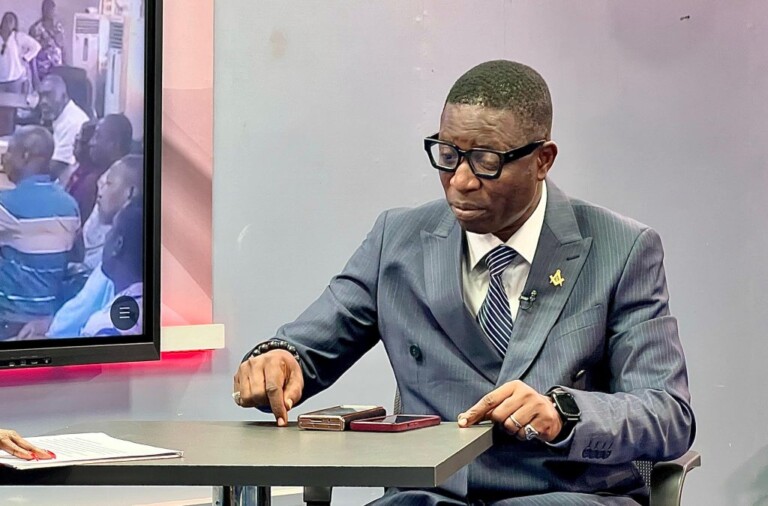
The Deputy Director of Elections and IT of the National Democratic Congress (NDC), Rashid Tanko-Computer, says Ghana is beginning to reap the benefits of improved leadership and sound economic management under the current administration.
Speaking on Channel One TV’s current affairs programme The Big Issue, he drew a sharp contrast between the present government’s approach and that of the previous administration, which he accused of corruption and poor crisis management, particularly during the COVID-19 pandemic.
According to him, weak leadership in the past plunged the country into severe economic hardship, eroding public confidence and worsening living conditions for ordinary Ghanaians.
Rashid Tanko-Computer maintained that the situation has changed, insisting that current leadership is delivering visible results. He pointed to greater economic stability, easing inflation, and heightened consumer activity in major markets as signs of recovery.
He argued that government policies are beginning to ease the cost of living and restore confidence in Ghana’s economic direction.
“Under their regime, we saw that corruption and covid-19 were equal to each other. It was terrible. Now in Ghana, we have gotten better leadership now. Leadership is about everything. We have been able to stabilize the economy for the good people of Ghana.
“Inflation has come down. We all saw what happened at Makola during Christmas. Fire Service had to send their water tanks to water people because of the unprecedented crowd because prices of goods were down. People were there to shop. Did you ever see this in the last eight years?” he said.
The England-wide impact of Man City's manager

EmailPrintOpen Extended ReactionsIN AUGUST 2024, then-MK Dons defender Dean Lewington walked up on stage at the Manchester Opera House to accept his PFA Merit Award. He was asked about the change he had seen in English football over a career that spanned more than 20…
Police arrest seven notorious highway robbers
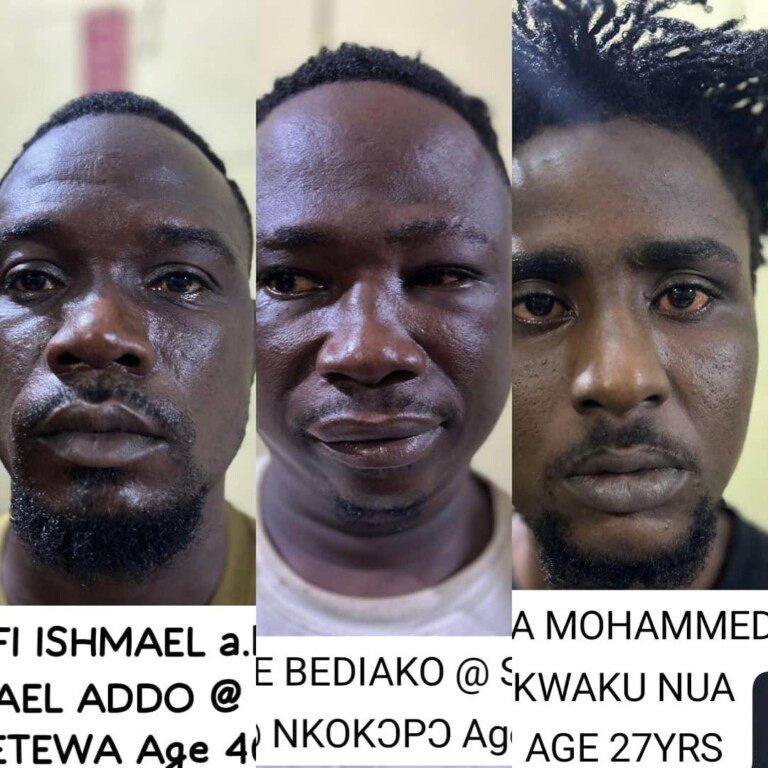
The Police have arrested seven suspected members of a dangerous highway robbery gang believed to have carried out several violent attacks in parts of the Greater Accra, Eastern and Ashanti regions.

In a statement issued on January 10, 2026, the Accra Regional Police said the arrests followed weeks of intelligence gathering linked to a robbery at a house in Peduase, Aburi, on November 29, 2025. The suspects reportedly used firearms to rob residents of mobile phones, jewellery and cash.

Police explained that the breakthrough came on January 6, 2026, when officers from the Eastern Regional Police Intelligence Directorate, working with Accra-based officers, arrested a suspect identified as Kofi Ishmael at Avenor in Accra. During questioning, he admitted taking part in the robbery and led police to the alleged leader of the gang, Kwame Bediako, popularly known as Star Boy.

Kwame Bediako was later arrested at Ablekuma Agape. A search at his residence led to the discovery of a pump-action gun hidden in a fence wall, along with four cartridges. Police said he also admitted to being involved in several robbery incidents.
 Investigations revealed that the gang had carried out robberies on major highways, targeting motorists and trailer drivers along routes such as the Tema Motorway, Achimota Forest Road, Pokuase, Amasaman, Suhum, Nkawkaw and the Juaso–Kumasi stretch. The suspects were allegedly planning another robbery when they were arrested.
The seven suspects currently in police custody include Salia Mohammed, also known as Kwaku Nuah; Kofi Ishmael, also known as Ishmael Addo or Kofi Ketewa; Kwame Bediako, also known as Star Boy or Nkokorpor; Kwadwo Kalovi, also called Aticho; Mumuni Abdul Razak, known as Mogambo; Kwasi Akambuley, also called Kwasi Fresh; and Kwame Bonsu, known as Killer Ntua. One of the suspects is receiving medical treatment while in custody.

Police say the suspects have also been linked to earlier robbery cases, including attacks on market women and motorists, as well as a robbery that led to the death of a driver. Some of them are believed to have jumped bail in previous cases still before the courts.
Items retrieved during the operation include firearms, ammunition, machetes, knives, mobile phones and other items believed to be stolen. Police say efforts are ongoing to arrest other accomplices who are still on the run.
The Accra Regional Police Command has assured the public of its commitment to fighting crime and encouraged anyone with useful information to report to the nearest police station.