

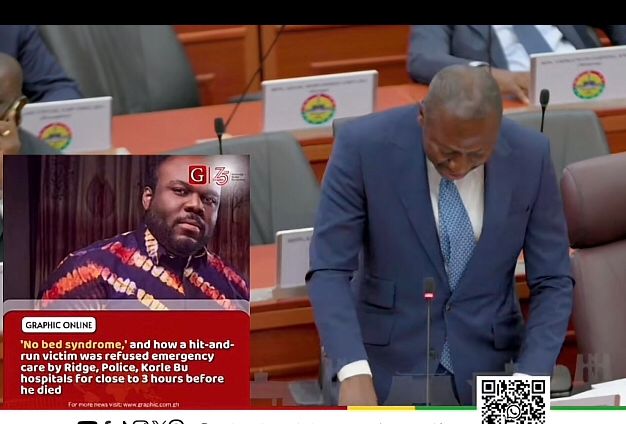
On the floor of Parliament, the Minority Leader, Osahen Alexander Afenyo-Markin, has called for comprehensive reforms within Ghana’s healthcare and emergency response systems following the tragic death of 29-year-old hit-and-run victim Charles Amissah.
Raising the matter during parliamentary proceedings, Afenyo-Markin expressed deep concern over reports that the young man was transferred from one public hospital to another and allegedly turned away repeatedly before eventually losing his life. He described the incident as a grave indictment on the country’s social protection and public health systems.
“If a man can be moved from one public hospital to another and turned away at every door until he dies, then the social contract has failed and none of us is safe,” the Minority Leader stated.
According to him, the circumstances surrounding Amissah’s death go beyond a single tragic incident and reflect systemic failures that place ordinary citizens at risk, particularly during medical emergencies. He stressed that access to emergency healthcare should never be determined by bureaucracy, logistics, or institutional hesitation.
Afenyo-Markin urged Parliament to treat the matter with urgency, calling on the Ministry of Health, the Ghana Health Service, and all relevant state agencies to conduct a thorough investigation into the incident and ensure accountability where necessary.
He further called for reforms aimed at strengthening emergency care coordination, improving referral systems among public hospitals, and enforcing clear protocols that prevent patients from being denied critical care in life-threatening situations.
The Minority Leader emphasized that public confidence in state institutions depends on their ability to protect lives, especially in moments of vulnerability. He warned that failure to act decisively would erode trust and deepen public frustration.
The death of Charles Amissah has since sparked public outrage, reigniting national conversations around road safety, emergency medical response, and the condition of Ghana’s public healthcare system.
As Parliament considers the call for reforms, many Ghanaians are watching closely to see whether the tragedy will lead to lasting institutional changes or become another unresolved national concern.


