


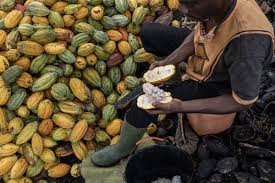
Ghana’s cocoa sector has entered a new phase following the government’s decision to reduce the farmgate price of cocoa beans, a move that has sparked widespread discussion among farmers, industry experts, and policymakers.
The announcement comes at a time when global cocoa prices are experiencing volatility, influenced by fluctuating demand, currency instability, and changing climate conditions in major producing regions.
Cocoa remains one of Ghana’s most valuable export commodities, supporting millions of livelihoods directly and indirectly across the country.
Government officials explain that the price adjustment is necessary to align domestic pricing with international market realities and to prevent long-term distortions in the cocoa economy.
The revised farmgate price is also linked to a newly introduced financing model aimed at stabilizing the cocoa supply chain.
Under this new model, cocoa purchases will rely less on short-term borrowing and more on structured financial planning backed by export revenue projections.
Officials argue that this approach will reduce debt accumulation and enhance sustainability in the sector.
However, cocoa farmers have expressed concerns that lower prices may increase financial hardship, especially during a period of rising living costs.
Farmer associations are calling for stronger social protection mechanisms to cushion the impact of the price reduction.
Some producers worry that the change could encourage smuggling across borders where prices may be higher.
The government insists it is strengthening monitoring systems to prevent illegal cocoa trading.
Agricultural economists note that Ghana’s cocoa sector has long struggled with balancing farmer welfare and macroeconomic stability.
They argue that price reforms, while painful, are sometimes unavoidable in a globally competitive market.
Climate change continues to affect cocoa yields, increasing production costs for farmers.
Erratic rainfall and rising temperatures have reduced productivity in several cocoa-growing regions.
The government has promised to expand rehabilitation programs for old farms to boost yields.
Extension services are also expected to receive increased funding to support farmers with modern farming techniques.
International buyers are closely monitoring Ghana’s cocoa reforms, as the country remains a key supplier to the global chocolate industry.
Some analysts believe the reforms could make Ghana’s cocoa sector more attractive to long-term investors.
Others caution that social unrest could emerge if farmers feel excluded from decision-making.
The government says it consulted widely before announcing the new pricing structure.
Stakeholder engagement sessions are expected to continue in cocoa-growing communities.
Ghana’s cocoa regulator has emphasized that farmer welfare remains a top priority.
Officials say the price adjustment should be seen as part of broader structural reforms.
The cocoa sector has historically played a central role in Ghana’s economic development.
Any policy change within the industry therefore has nationwide implications.
Observers believe the success of the reforms will depend on transparency and effective implementation.
Farmer confidence will be critical in maintaining production levels.
As the new season approaches, all eyes remain on how farmers respond to the revised price.
The cocoa reforms mark a defining moment for Ghana as it seeks to balance global pressures with domestic stability.


