

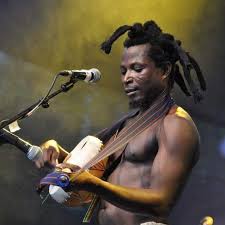
UPPER EAST REGION, GHANA – Legendary Kologo musician King Ayisoba has ignited fresh debate within Ghana’s creative industry after publicly calling for sweeping reforms to the country’s music royalty collection and distribution system.
In a recent interview, the celebrated traditional artist — widely known for his global hit “I Want to See You My Father” — criticized the current operations of the Ghana Music Rights Organization (GHAMRO), describing the royalty structure as “non-functional” and deeply unfair to musicians, particularly veteran and indigenous artists.
“The royalties in Ghana do not work for the creators; they work for the system,” Ayisoba stated emphatically.
A Long-Standing Concern in Ghana’s Music Industry
Royalty distribution has been a contentious issue in Ghana for years. Many musicians have complained about delayed payments, lack of transparency, and inadequate tracking of music usage across radio, television, and digital platforms.
King Ayisoba’s comments have once again drawn attention to these concerns, particularly for artists who depend on royalties as a primary source of income. As a pioneer of traditional Kologo music, Ayisoba represents a generation of musicians who have contributed significantly to Ghana’s cultural identity but often feel marginalized in modern commercial structures.
A major part of Ayisoba’s appeal centers on technological reform. He urged the government and the Copyright Office of Ghana to adopt advanced digital monitoring systems capable of accurately tracking airplay across broadcast stations and online streaming platforms.
Digital royalty systems used in more developed markets rely on automated reporting, metadata tracking, and performance monitoring tools to calculate payments transparently. Ayisoba believes implementing similar technologies in Ghana would:
- Improve transparency in royalty calculations
- Ensure accurate tracking of song usage
- Eliminate manual reporting discrepancies
- Increase trust between artists and royalty administrators
He emphasized that without modernization, Ghana’s music ecosystem risks falling behind as the global industry becomes increasingly digital.
Industry analysts note that traditional and non-mainstream musicians are often the most affected by royalty inefficiencies. Unlike commercially dominant genres, indigenous music may receive scattered airplay across regions, making manual tracking even more challenging.
Ayisoba’s advocacy highlights broader questions about inclusion and equity in Ghana’s creative economy. Many veteran musicians argue that while their works continue to be played on radio and at public events, the financial returns do not reflect the usage.
The remarks have reignited nationwide discussions among musicians, producers, policymakers, and entertainment stakeholders. Some industry players have echoed Ayisoba’s call, urging GHAMRO to increase transparency through publicly accessible reporting systems and independent audits.
Others argue that systemic challenges — including compliance issues from broadcasters and event organizers — also contribute to royalty gaps, suggesting reform must involve multiple stakeholders.
Observers believe meaningful change will require collaboration between:
- GHAMRO
- The Copyright Office
- The Ministry of Tourism, Arts and Culture
- Broadcasting institutions
- Digital streaming platforms
King Ayisoba’s intervention may serve as a catalyst for policy discussions aimed at strengthening Ghana’s intellectual property framework and protecting the livelihoods of creators.
As Ghana positions itself as a cultural powerhouse in Africa, fair compensation for artists remains central to sustaining growth. Ayisoba’s passionate appeal underscores a deeper concern: without structural reform, the very creatives who shape Ghana’s cultural narrative may continue to struggle financially.
Whether his call leads to immediate policy changes remains to be seen. However, his voice has once again spotlighted a critical issue at the heart of Ghana’s music industry.


