
Home Blog Page 43

Bank of Ghana Targets Sharp Cut in Bad Loans, Sets 10% NPL Goal for 2026

0

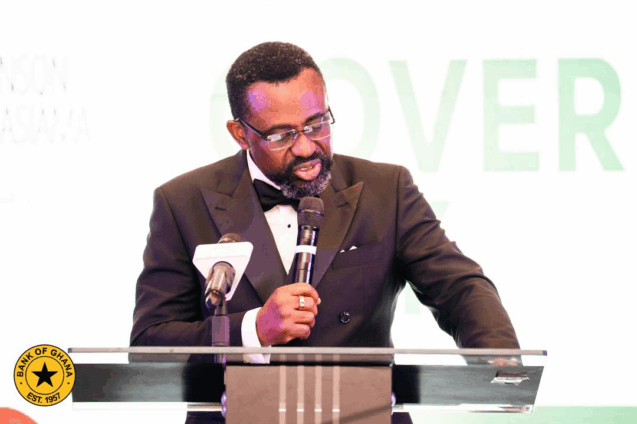
Governor of the Bank of Ghana (BoG), Dr Johnson Asiama, has announced that the central bank is pursuing an aggressive plan to reduce the country’s Non-Performing Loan (NPL) ratio to 10 per cent by the end of 2026, down from the current level of 19.5 per cent recorded in October 2025.

The Governor said the target is part of a wider strategy to strengthen asset quality across the banking sector, particularly as macroeconomic conditions improve and interest rates begin to decline.

Dr Asiama made the disclosure while delivering a keynote address at the Governor’s Day Annual Bankers’ Dinner, organised by the Chartered Institute of Bankers.

He explained that the easing economic environment should allow banks to restructure loans more intelligently, while still maintaining strict prudential standards.

“As we turn toward 2026, the central question is no longer whether stability can be restored,” he said. “The question is how that stability is used.”

He added that while 2025 marked the rebuilding of confidence, the focus for 2026 must be on deploying that confidence productively and responsibly to support a more competitive Ghanaian economy.

Call for Stronger Export Financing

Beyond banking sector stability, Dr Asiama urged commercial banks to take a more proactive role in supporting Ghana’s export-led growth agenda.

He called on banks to expand export finance desks, deepen support for agro-processing and non-traditional exports, and actively engage opportunities under the African Continental Free Trade Area (AfCFTA).

According to him, banks must move beyond domestic lending and help businesses transition into regional and global markets by financing export-oriented enterprises and managing trade-related risks.

“The banking sector must not sit on the sidelines of Ghana’s export agenda but help shape it,” he stressed.

He encouraged banks to design export-ready loan products, build industry-specific expertise, support hedging and risk-sharing instruments, invest in digital trade platforms, and assist exporters from production through to payment.

“When banks nurture exporters, they are not doing charity,” he noted. “They are expanding the country’s foreign exchange base, strengthening their own balance sheets, and reinforcing the resilience of the financial system.”

2025: A Year of Hard Choices

Reflecting on the past year, Dr Asiama described 2025 as a period defined by difficult but necessary decisions, taken at a time when confidence in policy signals and coordination had significantly weakened.

“When I assumed office, the challenge was not a shortage of ideas or tools,” he said. “It was the erosion of confidence.”

He explained that market behaviour at the time was driven more by uncertainty than conviction, making it difficult for even sound policies to gain traction.

Impact of Reforms

Dr Asiama highlighted a series of reforms implemented in 2025, which he said were instrumental in restoring discipline to both monetary policy and the financial markets.

He revealed that inflation, which exceeded 23 per cent at the beginning of the year, declined steadily into single-digit territory by November, reaching levels last seen in 2019.

Over the same period, the cedi appreciated by more than 20 per cent, a development he attributed to restored market order rather than speculative activity.

He added that sustained disinflation enabled the Monetary Policy Committee (MPC) to reduce the policy rate by a cumulative 1,000 basis points during the year—an outcome he said would not have been possible without firm policy discipline.

Strengthening the Banking Sector

The Governor noted that the reforms extended beyond monetary policy to the commercial banking sector, which entered 2025 still recovering from the effects of the Domestic Debt Exchange Programme (DDEP) and capital adequacy challenges.

At the end of 2024, 11 banks were operating below the required capital thresholds. By November 2025, that number had fallen to five, reflecting recapitalisation efforts, tighter supervision and improving economic conditions.

Dr Asiama also disclosed that the Bank of Ghana is laying the groundwork for the next phase of financial sector growth, aimed at long-term resilience and expansion.

He announced the completion of the National Payment Systems Strategy (2025–2029), which provides a coordinated roadmap for interoperability, cybersecurity, instant payments and modernisation of Ghana’s payments infrastructure.

According to him, the strategy positions Ghana’s financial system to better support economic growth in the years ahead.

Trump Administration Begins Review That Could Open Door for Nvidia AI Chip Sales to China

0

The administration of U.S. President Donald Trump has initiated an inter-agency review that could pave the way for the first exports of Nvidia’s H200 artificial intelligence chips to China, according to five sources familiar with the matter. The move follows Trump’s recent pledge to permit the controversial sales under a new framework.

Earlier this month, President Trump announced that his administration would allow Nvidia to sell its H200 chips, the company’s second-most powerful AI processors, to Chinese buyers, subject to a 25 percent government fee. Trump argued that the decision would help American technology firms maintain their global lead by reducing demand for Chinese-made alternatives.

The announcement immediately triggered criticism from lawmakers and policy experts across the U.S. political spectrum who warn that supplying advanced AI hardware to China could enhance Beijing’s military capabilities and weaken Washington’s technological edge.

Despite Trump’s public stance, uncertainty has lingered over how quickly the sales could be approved and whether Chinese authorities would permit domestic companies to proceed with purchases.

Sources say the U.S. Commerce Department, which oversees export controls, has now forwarded Nvidia-related license applications to the Departments of State, Energy, and Defense for formal review. Under export regulations, those agencies have 30 days to assess the applications and submit their recommendations.

An administration official stressed that the process will be comprehensive and not symbolic, noting that national security considerations will be central to the review. However, under U.S. law, the final authority on export approvals rests with the president.

Neither the Commerce Department nor Nvidia responded immediately to requests for comment. A White House spokesperson declined to address the specifics of the review but said the administration remains committed to protecting U.S. technological leadership while safeguarding national security interests.

The move marks a sharp shift from policies under former President Joe Biden, whose administration imposed sweeping restrictions on advanced AI chip exports to China and other countries seen as potential intermediaries. Those measures were justified by concerns that sensitive technologies could be diverted for military use.

Trump’s approach also represents a reversal from his first term, when he aggressively curtailed China’s access to U.S. technology, citing allegations of intellectual property theft and military exploitation—claims China has repeatedly denied.

Critics remain unconvinced. Chris McGuire, a former National Security Council official under President Biden, described the potential exports as a serious strategic error, arguing that advanced chips remain a key constraint on China’s AI ambitions.

Others within the Trump administration disagree. Officials led by White House AI adviser David Sacks contend that controlled exports could actually slow China’s domestic chipmakers, including Huawei, by keeping them dependent on U.S. technology rather than accelerating indigenous alternatives.

Meanwhile, Nvidia is reportedly considering increasing production of the H200 chip after strong interest from Chinese buyers exceeded current manufacturing capacity. Although less powerful than Nvidia’s latest Blackwell chips, the H200 remains widely used in advanced AI applications and has never previously been approved for sale to China.

Trump had earlier explored allowing exports of a scaled-down version of the Blackwell chips but ultimately opted to open discussions around the H200 instead, positioning it as a compromise between commercial opportunity and national security concerns.

‘The Wire’ Actor James Ransone Dies at 46; Medical Examiner Cites Apparent Suicide

0

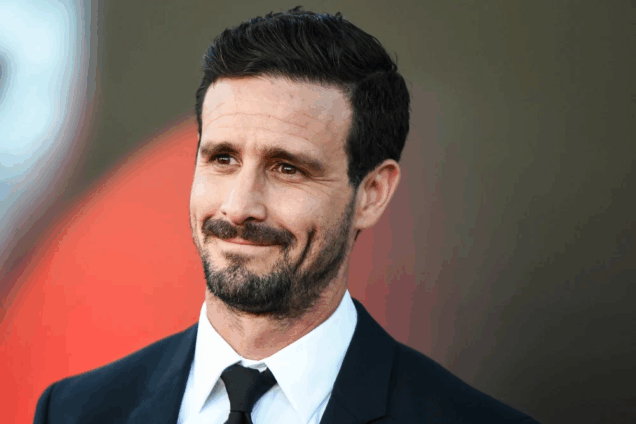
Actor James Ransone, best known for his role as Ziggy Sobotka in the acclaimed television series The Wire, has died at the age of 46. According to the Los Angeles County Medical Examiner, his death on Friday is being treated as an apparent suicide.

Ransone, a native of Maryland, also gained widespread recognition for portraying Eddie Kaspbrak in the horror film It: Chapter Two. Over a career spanning more than two decades, he built a reputation as a versatile character actor across television and film.

His television credits included notable appearances in Generation Kill and Bosch, with his final on-screen role coming in Season 2 of Poker Face, which aired in June, according to The Movie Database. In film, Ransone appeared in the Sinister franchise, Tangerine, Mr. Right, and The Black Phone series.

In a 2016 interview with Interview magazine, Ransone spoke candidly about the personal struggles that shaped his early life. He described adolescence as a difficult period, saying he struggled to fit in at traditional public schools. His mother later enrolled him in an arts school, a decision he credited with changing his life.

“I think it saved me as a kid,” he said. “Going to arts school saved me.”

Ransone later attended film school in New York but admitted that he dropped out due to poor attendance. He spent several years navigating small acting roles while also playing music, at one point considering a career as a musician before committing fully to acting.

He also spoke openly about his battle with substance abuse, revealing that he spent several years addicted to heroin before achieving sobriety in his late twenties. He described his work on Generation Kill as a turning point, both personally and professionally.

The experience held special meaning for Ransone, whose father was a Vietnam War veteran. Being around young Marines during the production, he said, helped him better understand his father’s past and reshaped how he viewed his own life.

“It didn’t do so much for my career, but it shaped me and the way that I think about my life,” he said.

James Ransone is survived by his wife, Jamie McPhee, and their two children. His representatives did not immediately respond to requests for comment.

If you or someone you know is struggling, mental health professionals encourage seeking help from local support services or crisis hotlines.

Three Arrested as Police Hunt for Missing Newborn Stolen from Tamale Hospital

0

The Domestic Violence and Victim Support Unit (DOVVSU) of the Northern Regional Police Command has arrested three individuals in connection with the theft of a newborn baby from One Heart Hospital in Tamale.

The arrests were carried out on Sunday, December 21, as part of urgent investigations into the incident, which has sparked public outrage and heightened security concerns.

Those in custody include two nurses, Abubakari Fatima Bintu and Grace Asiedu Mensah, who were on duty at the time of the incident, as well as a security guard, Abukari Iddi.

Preliminary police investigations indicate that the baby was taken after a woman, suspected to have impersonated a nurse, entered the labour ward and informed staff that she was taking the newborn for an injection. The woman reportedly left the ward with the baby and failed to return.

Confirming the arrests, the Northern Regional Police Public Relations Officer, Inspector Alhassan Luckman Niendow, said intelligence-led operations are ongoing to locate the missing baby and apprehend any additional suspects connected to the case.

“The police are treating this matter with the utmost urgency. Our priority is to find the baby and ensure the perpetrators are brought to justice,” he said.

Earlier, the baby’s mother, Abdul Mumin Safiyatu, told JoyNews that she had stepped out briefly to use the washroom. Upon her return, she discovered her baby was missing, prompting panic among staff and patients at the facility.

An eyewitness also recounted that a woman entered the delivery room, claimed she was taking the baby for routine medical checks, and later disappeared with the child.

The baby’s father, Bawa Sayibu, said he was informed around 1:15 a.m. that his wife had delivered a baby boy. He explained that he later purchased medication required for the newborn’s discharge and left the hospital around 10:00 a.m.

“I was sitting with my colleagues when my sister called me crying and asked me to rush to the hospital,” he said. “When I arrived, I was told the baby had been stolen.”

Mr Sayibu added that following a report to the police, several arrests were made, including one of his wives who works at the hospital.

The incident triggered heightened tension at the facility, as residents of Lamashegu stormed the hospital demanding answers and accountability. Many expressed shock over the incident and raised serious concerns about security lapses within health facilities.

Residents have since called on hospital management and security agencies to strengthen surveillance and access controls to prevent similar incidents and restore public confidence in healthcare institutions.

Academic Threatens Legal Action Against University of Bristol Over Disrupted Talk and Alleged Free Speech Failures

0

A leading academic who chaired a recent government review into the collection of sex and gender data has threatened legal action against the University of Bristol, accusing the institution of failing to adequately protect her right to freedom of speech.

Professor Alice Sullivan has also formally written to the higher education regulator, the Office for Students (OfS), following the disruption of a public lecture she delivered at the university that was interrupted by a protest from trans rights activists.

Universities in England have a long-standing legal duty to uphold freedom of speech for staff, students and visiting speakers, while also balancing that obligation with the right to lawful protest. That responsibility has taken on renewed significance following the introduction of a strengthened freedom of speech law, which came into force in August.

The University of Bristol has rejected Prof Sullivan’s claims, insisting that the event proceeded safely despite what it described as “unacceptable disruption,” and maintaining that all actions taken were consistent with its commitment to free speech.

Prof Sullivan led a government-commissioned review published in March, which recommended that biological sex and gender identity be recorded as separate categories in official data collection. She said she accepted an invitation in July 2024 from a Bristol academic to speak on her findings, with the event eventually scheduled for October 22, 2025, after several delays.

In a letter sent by her lawyers, Prof Sullivan said the university initially proposed holding the event online rather than in person, a suggestion she declined. Speaking to the BBC, she said she did not fully anticipate the scale of the protest but accepted that people with opposing views had the right to express them peacefully.

“Everyone has a right to peaceful protest, but it must never become a heckler’s veto that shuts down other people’s right to speak,” she said. “This is not just about my rights as a visiting speaker; it is about the right of the university community to debate and listen.”

On the day of the event, protesters gathered outside the venue, some holding placards and using loudhailers. Videos verified by the BBC showed demonstrators making rude gestures, while placards were pressed against large windows visible from inside the lecture room. Prof Sullivan described the scene as intimidating and likened it to a “zombie apocalypse.”

The disruption escalated when the fire alarm was triggered more than once, forcing interruptions to the talk. Security staff later advised moving the event to a higher floor. As Prof Sullivan left the building, she said she heard chants of “shame on you.”

Police confirmed they attended the event but said no arrests were made.

Prof Sullivan’s legal letter argues that the University of Bristol had more than 15 months to arrange a secure and suitable venue. It also claims that internal documents disclosed by the university show complaints were made by its LGBTQ+ staff network opposing her appearance.

She has raised these concerns with the Office for Students, which has the authority to fine universities that fail to uphold freedom of speech. Earlier this year, the OfS imposed a record £585,000 fine on the University of Sussex, ruling that its transgender and non-binary inclusion policy had created a “chilling effect” on lawful speech.

That case followed the departure of philosophy professor Kathleen Stock, who resigned after sustained protests over her gender-critical views. In the wake of the OfS ruling, the University of Bristol withdrew a similar policy requiring staff to remove “transphobic and anti-trans material” from campus.

Prof Sullivan told the BBC she believes “gender ideology” influenced the university’s handling of her talk and said senior management missed an opportunity to address her concerns constructively.

“They could have apologised and said they would do better in future. That is all I want from them,” she said.

In response, a University of Bristol spokesperson said the lecture went ahead safely and that measures were put in place to protect both the speaker and attendees.

“We refute claims that we failed to protect Professor Sullivan’s freedom of speech,” the spokesperson said. “Every action we took was in support of lawful free speech and necessary for public safety.”

The university condemned the behaviour of protesters, stating that intimidation was not a form of peaceful protest and confirming that disciplinary action would be taken if any members of the university community were identified as being involved.

‘Next of Kin’ Is Not an Heir: Lawyer Clarifies Widespread Misconceptions About Inheritance and Legal Authority

0

A Ghanaian lawyer, Abdul Gafaru Ali, has clarified that being named as a “next of kin” does not automatically confer inheritance rights or legal authority over a person’s estate or property.

According to him, the designation merely serves as an emergency contact and carries no legal weight unless supported by specific legal instruments or recognised family relationships.

Mr Ali explained that inheritance or decision-making authority can only arise if the named individual is explicitly listed as a beneficiary in a Will, has been granted a valid Power of Attorney, or is an immediate family member such as a spouse or child under applicable law.

He made these clarifications during a recent edition of The Mirror Dialogue Series held in Accra last Wednesday.

Addressing a commonly misunderstood term that appears on bank, employment and hospital forms, Mr Ali said many people wrongly attach legal significance to the “next of kin” label. He attributed the confusion to inadequate public education and the growing influence of misinformation on social media.

“Many people assume that once they are listed as next of kin, they automatically gain rights over property or become decision makers. That assumption is legally incorrect,” he stated.

Mr Ali, a Senior Associate at Sustaineri PRUC, explained that a next of kin could be anyone chosen by the individual, including a family member, friend or colleague, preferably someone mature and mentally sound. However, he stressed that Ghanaian law does not recognise claims based solely on next-of-kin status, even when multiple persons assert such claims.

Responsibilities and limitations

Touching on the responsibilities associated with the role, Mr Ali noted that the duties of a next of kin are minimal and largely administrative. These may include assisting institutions by providing information when necessary.

He further explained that individuals may list different next-of-kin contacts on various forms depending on context and purpose.

“Unlike a Power of Attorney, a next of kin has no authority to make legal, financial or medical decisions on behalf of the individual,” he emphasised.

Power of attorney and beneficiaries explained

Mr Ali also distinguished between next of kin, beneficiaries and holders of a Power of Attorney under Ghanaian law. He explained that a Power of Attorney grants a person authority to act on behalf of another while that person is alive. Such authority may cover signing documents, attending meetings or managing legal matters.

However, he stressed that a Power of Attorney becomes void immediately upon the death of the person who granted it.

Beneficiaries, on the other hand, are individuals legally entitled to inherit from a deceased person either through a Will or under statutory law.

He explained that executors named in a Will may apply for probate from the court, which empowers them to administer and distribute the deceased’s estate. Where no Will exists, surviving spouses, children, parents or customary successors may apply for letters of administration to manage the estate in accordance with PNDC Law 111.

The importance of writing a Will

Mr Ali urged Ghanaians to prioritise drafting Wills to ensure their assets are distributed according to their wishes after death. He explained that a valid Will must be in writing, signed by the testator in the presence of two witnesses, and preferably deposited at the court.

He said a properly drafted Will provides clarity, reduces family disputes and offers guidance to loved ones, even though it may still be challenged under certain circumstances.

Need for public education

Mr Ali further called on institutions, legal practitioners, the media and the state to intensify public education on estate planning and the limitations of the “next of kin” concept.

He cited the Bank of Ghana’s 2024 public notice, which clarified the role of next of kin, as a commendable step in the right direction.

He urged banks, insurance companies and other organisations that require next-of-kin details to consistently explain to clients that the designation does not make the person an automatic beneficiary or heir.

“This clarity will prevent unnecessary disputes and protect families from avoidable legal battles,” he said.

Nicki Minaj Stuns Conservative Gathering, Praises Trump and JD Vance as ‘Role Models’ at Arizona Memorial Event

0

Global rap icon Nicki Minaj made an unexpected appearance on Sunday at a major conservative gathering in Arizona, where she publicly praised former U.S. President Donald Trump and Vice President JD Vance, describing them as positive role models for young men.

Minaj attended AmericaFest, the flagship annual convention organised by Turning Point USA, which this year included a memorial tribute to the late conservative activist Charlie Kirk. She was interviewed on stage by Erika Kirk, Charlie Kirk’s widow and current leader of the organisation, in a wide-ranging conversation that touched on politics, faith and free expression.

During the discussion, Minaj explained her growing support for Trump, marking a notable shift from her earlier public criticism of him. She also spoke about her outspoken condemnation of violence against Christians in Nigeria, a stance that recently drew international attention.

Her presence at the event generated significant interest, given her complicated political history and previous opposition to Trump-era policies. However, her appearance at AmericaFest appears to further cement her alignment with the Make America Great Again movement and conservative youth activism.

On stage, Minaj took a swipe at California Governor Gavin Newsom, echoing a nickname previously used by Trump. Newsom, a Democrat, is widely viewed as a potential presidential contender in 2028.

Expressing admiration for both Trump and Vice President Vance, Minaj said the current administration was filled with leaders who possess “heart and soul,” adding that they make her proud. She described both men as relatable figures with a rare ability to connect with ordinary people.

The event briefly turned tense when Minaj, while attempting to compliment Vance’s political effectiveness, used the word “assassin,” quickly realising the sensitivity of the remark given the tragic death of Charlie Kirk. The rapper paused mid-sentence as the audience reacted, while Erika Kirk appeared emotional. Minaj covered her mouth in visible regret before the moment passed.

Erika Kirk later brushed off the incident, expressing affection for Minaj and reassuring the crowd. Kirk’s husband was assassinated in September, a loss that deeply shaped the tone of the gathering.

Minaj’s political evolution has also included vocal concern about religious persecution abroad. Last month, she shared a statement by Trump suggesting possible sanctions against Nigeria over the treatment of Christians, saying the message made her grateful for the freedom of worship enjoyed in the United States. That post later led to her participation in a panel discussion at the U.S. mission to the United Nations alongside Ambassador Mike Waltz and faith leaders.

Addressing criticism she has faced from the entertainment industry, Minaj said she was no longer willing to be silenced or pressured into conformity. She argued that expressing independent views has become controversial because people have stopped thinking critically.

Erika Kirk praised Minaj for her courage, noting the backlash she has faced for her political stance. Minaj responded dismissively, saying she does not pay attention to critics, a sentiment Kirk echoed by saying their focus was on “building.”

“We’re the cool kids,” Minaj quipped, drawing cheers from the audience.

Born in Trinidad and Tobago, Minaj rose to global fame with hits such as Super Freaky Girl, Anaconda and Starships, and has received 12 Grammy nominations over her career.

In contrast to her current stance, Minaj was among several celebrities who strongly condemned Trump’s zero-tolerance immigration policy in 2018. At the time, she described herself as having entered the U.S. as a child without legal documentation and pleaded publicly for an end to family separations at the southern border.

Reflecting on that shift during her AmericaFest appearance, Minaj defended her evolution, saying there is nothing wrong with reassessing one’s beliefs.

“It’s OK to change your mind,” she said.

Canada Breaks Major Auto Theft Ring, Recovers 306 Stolen Vehicles Bound for West Africa and Middle East

0

Canadian authorities have dismantled a highly coordinated international vehicle theft and export syndicate following a two-year investigation that resulted in the recovery of 306 stolen vehicles worth an estimated 25 million Canadian dollars. Many of the vehicles were destined for markets in West Africa and the Middle East.

The operation, known as Project CHICKADEE, was spearheaded by the Ontario Provincial Police (OPP) through its Provincial Auto Theft and Towing (PATT) Team, in close collaboration with the Canada Border Services Agency (CBSA) and multiple domestic and federal law enforcement partners.

Investigators revealed that the criminal operation went far beyond conventional car theft. The network involved freight forwarders, transport drivers, falsified shipping paperwork and sophisticated international export channels, indicating a deeply entrenched transnational organised crime structure.

Investigation Triggered in 2023

Project CHICKADEE began in August 2023 after four stolen vehicles were recovered in the Greater Toronto Area. What initially appeared to be a routine case quickly exposed a much wider criminal pipeline focused on exporting stolen vehicles overseas.

Authorities discovered that vehicles were being re-identified using tampered Vehicle Identification Numbers (VINs), matched with forged documentation and loaded into shipping containers before being transported through major Canadian ports.

As intelligence expanded, investigators identified links to international organised crime groups, establishing Ontario as a critical supply point in a global auto theft trade.

Port Interceptions Nationwide

As the operation intensified, the OPP, CBSA intelligence units and the Organised Crime Enforcement Bureau began intercepting suspect shipping containers at ports in Montréal, Vancouver and Halifax, as well as during inland transit.

Police noted that once stolen vehicles leave Canada, recovery becomes extremely difficult, making port-level intervention a central strategy.

The Royal Canadian Mounted Police (RCMP), Halton Regional Police and the Équité Association were among several agencies that supported the investigation, highlighting its scale and complexity.

Coordinated Raids and Seizures

The first major enforcement phase took place on October 16, 2025, when search warrants were executed in Toronto, Vaughan, Woodbridge and Etobicoke. Seized items included large sums of cash, a re-VINed vehicle, electronic key programming devices and licence plates. One suspect was arrested at the time, while two others initially fled but were later apprehended.

A second and larger crackdown followed on November 27, with police searching 23 residential and industrial locations across Ontario and Québec. Thirteen vehicles were seized in communities including Brampton, Scarborough, Waterloo, Milton and Saint-Eustache.

The operation involved tactical units, emergency response teams, canine units and intelligence officers in what police described as a highly synchronised multi-agency action.

Full Scale of the Network

By the conclusion of Project CHICKADEE, authorities confirmed the seizure of:

  • 306 stolen vehicles recovered in Canada
  • Three firearms
  • Hundreds of licence plates, vehicle keys and key fobs
  • Forged shipping and export documents
  • Forklifts and tractor-trailer cabs used in logistics
  • Over CAD 190,000 and USD 32,000 in cash
  • Mobile phones, computers, hard drives and financial records

Arrests and Charges

A total of 20 suspects were arrested and charged with 134 offences under the Criminal Code, the Customs Act and the Cannabis Act.

Among those charged is Bismark Owusu-Ansah, a 64-year-old Ghanaian national residing in Brampton, Ontario. He faces five charges, including conspiracy to traffic stolen property, exporting proceeds of crime and possession of stolen property valued above CAD 5,000.

Police emphasised that all accused individuals are presumed innocent until proven guilty in court.

Financial Intelligence Breakthrough

Authorities credited financial intelligence from FINTRAC, Canada’s financial transactions monitoring agency, as a critical factor in tracing the flow of criminal proceeds. The OPP’s Provincial Asset Forfeiture Unit has since begun processes to seize assets believed to be connected to the syndicate.

Police Warn of Broader Impact

OPP Commissioner Thomas Carrique stressed that vehicle theft has far-reaching consequences.

“Auto theft is not a victimless crime. It fuels organised crime, violence and insecurity in our communities,” he said.

Another senior officer, Bryan Gast, noted that auto theft costs Canada more than one billion Canadian dollars annually, with proceeds often reinvested into firearms trafficking, drug networks and other illicit activities.

New Policing Strategy

Law enforcement officials say Project CHICKADEE reflects a strategic shift toward dismantling the entire criminal supply chain, from theft and document fraud to shipping and international export.

They say the operation sends a strong signal that Canada will no longer serve as a source country for global vehicle theft syndicates.

AG Dr Dominic Ayine to Update Public on Ken Ofori-Atta Case and Cybercrime Recoveries

0

Attorney-General and Minister for Justice, Dr Dominic Ayine, is set to brief the public on Wednesday, December 18, as part of the Government Accountability Series, highlighting developments in the case involving former Finance Minister, Ken Ofori-Atta.

The session will also showcase significant recoveries achieved in the government’s ongoing fight against cybercrime, reflecting efforts to safeguard public resources and strengthen accountability.

The briefing aims to provide clarity on the status of legal proceedings against the former Finance Minister, while also outlining the measures taken by the state to enforce transparency and uphold the rule of law.

Government Communications Minister, Felix Kwakye Ofosu, emphasized in a Facebook post that the update will focus on “facts, progress, and outcomes,” underscoring the public’s right to be informed about matters of national importance.

“This is about accountability and restoring confidence in the justice system,” Mr Kwakye Ofosu stated.

Regarding cybercrime, he revealed that the government has made “substantial recoveries” through rigorous investigations and prosecutions, reaffirming the administration’s commitment to combating digital fraud.

“We are seeing tangible results, and we will continue to protect both the public purse and citizens from cybercriminal activity,” he added.

The briefing forms part of a wider government effort to keep Ghanaians informed about high-profile cases and enforcement outcomes, reinforcing transparency and trust in state institutions.

Barcelona Reignite Interest in Pau Torres as Search for Left-Footed Centre-Back Continues

0

Barcelona’s long-standing plan to strengthen their defence with a left-footed centre-back has taken a familiar turn, with reports indicating renewed interest in Aston Villa defender Pau Torres.

The Catalan club has been monitoring several defensive options in recent months, compiling scouting assessments and financial details as they look to address a clear imbalance at the back. Injuries and departures have forced Barcelona to improvise this season, including the use of left-back Gerard Martín in central defence following the summer exit of Iñigo Martínez.

While names such as Nico Schlotterbeck and Marc Guéhi have previously been linked to the Blaugrana, a new-old candidate has now emerged. According to ESPN, Barcelona have revived their pursuit of Pau Torres, a player they tracked closely during his years at Villarreal before his move to the Premier League.

The 28-year-old Spain international is currently contracted to Aston Villa until 2028, having joined the English club in the summer of 2023 for around €33 million. Since arriving, Torres has been a key figure under manager Unai Emery, although his second season was briefly disrupted by a metatarsal injury.

Despite uncertainty over Aston Villa’s willingness to negotiate or the potential cost of a deal, Torres is said to be open to the idea of a move to Barcelona. The defender would reportedly consider an offer from the Catalan giants and is receptive to a return to Spanish football should talks materialise.

Comfortable in possession and strong in build-up play, Torres fits the profile of a modern Barcelona centre-back, reminiscent of the technical mould established during the era of Gerard Piqué. However, he is viewed more as a ball-playing defender than a commanding organiser, with Barcelona still believed to be seeking a vocal leader to partner young Pau Cubarsí at the heart of their defence.

As Barcelona continue to evaluate their options, Torres’ name adds another intriguing dimension to their ongoing defensive rebuild.