


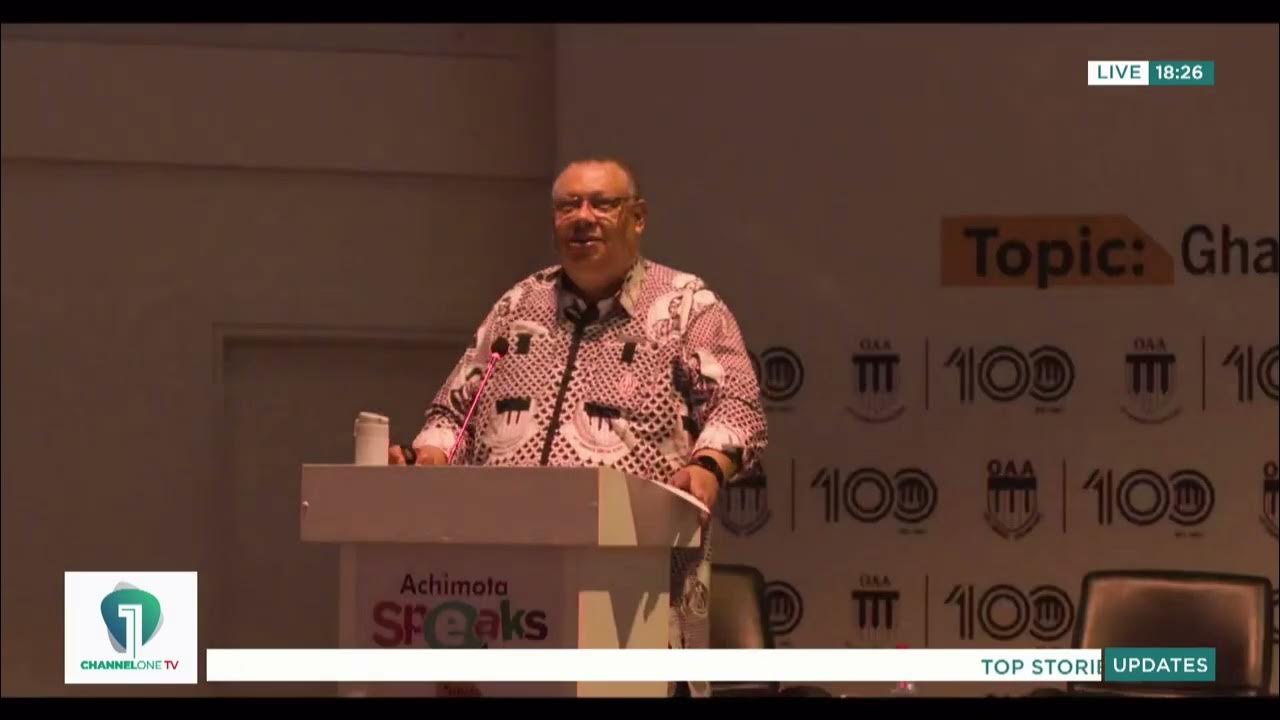
Environmental Scientist, Prof. Chris Gordon, has raised alarm over Ghana’s water supply woes, attributing the persistent shortages in urban areas largely to ageing infrastructure, leakages, and deliberate sabotage of delivery systems.
Speaking on the Citi Breakfast Show on Thursday, January 8, 2026, Prof. Gordon said that a significant portion of treated water never reaches consumers, making it difficult for Ghana Water Limited (GWL) to recover costs or expand services.
“My other concern is the whole issue of pricing. The cost of the infrastructure is very high; it is a major investment. But the major challenge in our infrastructure right now is the delivery pipes. Some are leaking,” he explained.
Citing sector data, he noted that large volumes of water are lost along transmission lines due to broken and deteriorated pipes.
“When you look at the data and statistics, you will realise that most of the water that leaves the water treatment plant gets lost along the way. They cannot be costed because no consumer picks it. It is just running out of broken pipes,” Prof. Gordon said.
Beyond technical faults, human interference is also worsening the problem, with some individuals deliberately damaging pipelines to access water for farming and other activities.
“People also deliberately break the pipes to gather water to irrigate their vegetable farms. So, replacing that infrastructure itself is a major investment,” he said, warning that such acts undermine efforts to address water shortages, especially in urban centres already grappling with intermittent supply.
“So, if we are deliberately sabotaging the efforts that are in place, it is not always the case that people are sitting in and not doing anything,” he added.
Prof. Gordon called for stronger public cooperation, enhanced enforcement, and increased investment in infrastructure to ensure a reliable and sustainable water supply across the country.
ATMA Plant shutdown disrupting water supply in Teshie, Nungua, Spintex – GWL

