


TEHRAN — Iran’s Supreme Leader Ayatollah Mojtaba Khamenei has vowed that Iran will continue to avenge the killing of his father, the late Ayatollah Ali Khamenei, and other senior officials, as tensions with the United States and Israel threaten to unravel a fragile interim ceasefire.
In a written statement read on state television on Saturday, Khamenei said Iranians would “not forget the blood” of those killed during U.S. and Israeli strikes on Iran on February 28, and pledged continued retaliation for what he called acts of aggression against the country’s leadership.
The statement came as President Donald Trump issued new threats of further missile strikes against Iran on his Truth Social platform, and as Iranian and U.S. officials traded demands over security in the Strait of Hormuz.
Funeral calls and renewed threats
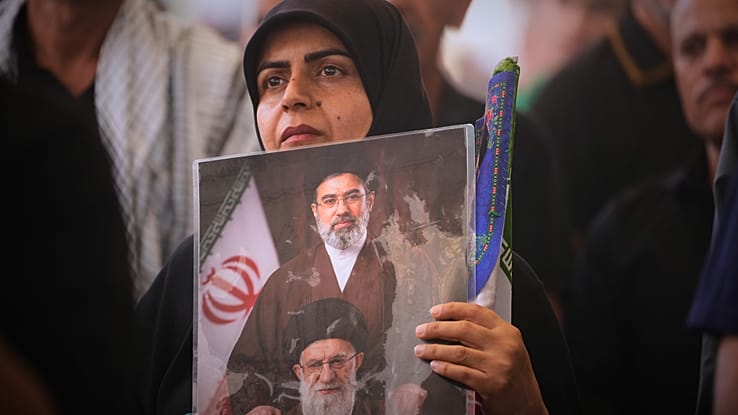
The latest escalation follows days of mourning for Ali Khamenei, who died during the February conflict. His funeral drew large crowds in Tehran and other cities, where mourners carried portraits of both father and son and chanted slogans calling for the killing of Trump and Israeli Prime Minister Benjamin Netanyahu.
Seizing on the scenes, Trump posted a series of messages on Friday declaring the ceasefire “over” but adding that the U.S. would still pursue negotiations. He also warned of additional missile attacks if Iran did not meet American demands.
Earlier this week, three commercial ships were attacked in the Strait of Hormuz. U.S. officials blamed Iranian-backed forces and launched airstrikes on targets inside Iran. Iran responded with retaliatory fire aimed at positions across the region.
Senior U.S. officials have since demanded that Tehran issue a public guarantee that the Strait of Hormuz will remain open and that ships passing through the vital waterway will not be attacked.
So far, Iran has refused. Iranian officials insist the strait remains under Tehran’s control and that Iran retains the right to regulate and charge vessels moving through
Iranian Foreign Minister Abbas Araghchi traveled to Oman on Saturday for a new round of talks. A day earlier, Qatari mediators met with Iranian officials in Tehran as part of efforts to de-escalate the crossfire that has hit multiple countries in the region since February.
The Oman talks are aimed at salvaging the interim deal that was meant to end hostilities between Iran, the U.S., and Israel. That agreement has buckled under repeated strikes and counter-strikes over the past month.
Omani officials, who have historically hosted backchannel talks between Washington and Tehran, have urged both sides to avoid actions that could close the Strait of Hormuz a passage through which nearly 20% of the world’s oil and gas shipments travel.
Mojtaba Khamenei’s rise to the position of Supreme Leader followed his father’s death in February. At 56, he is seen as continuing his father’s hardline posture on foreign policy while facing the immediate challenge of managing a war that has already claimed several top Iranian commanders.
“The enemies thought they could break the will of the Iranian people by targeting our leaders,” the statement said. “They were wrong. We will continue the path of our martyrs until justice is achieved.”
The reference to “martyrs” included Ali Khamenei and other officials killed in the February 28 strikes, which targeted military and leadership sites in what the U.S. and Israel described as a response to Iranian actions in the region
The Strait of Hormuz has become the focal point of the current standoff.
After the attacks on three ships this week, Washington demanded explicit assurances from Tehran. Tehran countered that security in the strait is a sovereign issue and that foreign powers should not dictate terms.
Iranian officials argue that they are protecting the waterway from what they call illegal and hostile traffic, while also using it as leverage in negotiations.
U.S. officials say any attempt to restrict passage or impose charges would be considered an act of economic warfare and could trigger further military action.
The standoff has already forced several shipping companies to reroute vessels, raising insurance costs and fuel prices.
Retaliatory strikes have hit targets in Iraq, Syria, and the Gulf, drawing condemnation from regional governments. Humanitarian groups report civilian casualties and displacement in border areas.
At the same time, the conflict has pushed oil prices up and renewed fears of a wider regional war involving Israel, Iran, and U.S. forces.
European and Asian powers have called for restraint. The UN Security Council held an emergency session on Friday but adjourned without a resolution after disagreements over language condemning the attacks.
In Tehran, Mojtaba Khamenei faces the task of balancing domestic demands for revenge with the practical need to keep Iran’s economy afloat amid sanctions and war.
Analysts say the next 72 hours will be critical. If Oman talks produce even a limited agreement on the Strait of Hormuz, it could create space for a broader ceasefire. If not, further strikes appear likely.
In his statement, the Supreme Leader struck a defiant tone but left room for diplomacy, saying Iran “reserves the right to defend itself by all means” while also noting that “the door to honorable negotiation is not closed.”
As mourners in Tehran continue to mark the death of Ali Khamenei, the question now is whether his son can prevent the war that killed his father from consuming the region.


