


Ransacked stores in Durban as police arrest 900 people nationwide; government says most marches were peaceful
Ransacked shelves, broken fittings, and discarded packaging were all that remained inside several shops near Durban on Wednesday, July 1, 2026, after looting broke out during nationwide protests demanding that undocumented foreign nationals leave South Africa.
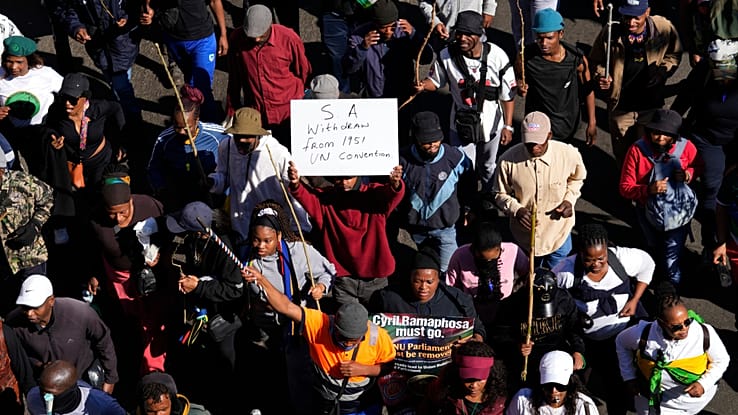
The demonstrations on Tuesday were the first coordinated national day of action in a weeks-long campaign by fringe groups that set a June 30 “deadline” for illegal immigrants to leave. Police said most of the marches were peaceful, but looting in some areas led to widespread damage and arrests.
In Clermont, a township outside the port city of Durban, shop owners said looters stripped stores of food, appliances, building materials, and clothing. Several traders estimated losses in the millions of rand and said they were unsure whether they could reopen.
Mohamed Abdul, 29, runs a shop selling food, hardware, and clothing. He said a large group stormed the store at around 6:00 pm on Tuesday.
“We are not illegal in the country but they just started looting. I was scared and felt betrayed because we had 19 people employed here but today they have no job,” Abdul said.
Originally from Somalia, Abdul said he has lived in the area for 11 years. “The community knows me and this is one of the main stores people rely on and we used to donate to families who have nothing.”
According to Abdul, looters even took an ATM machine that was inside the supermarket, but left the safe outside.
Police were deployed in large numbers for Tuesday’s marches, citing fears of a repeat of the unrest in 2021 when around 350 people were killed.
A government multi-agency security body said there were 120 marches across the country on Tuesday. Only 12 required law enforcement intervention.
More than 900 people were arrested, with authorities saying most of those detained were undocumented foreigners and South African looters. The arrests included people caught stealing from shops during the protests.
Organisers had campaigned for weeks under the slogan that illegal immigrants should “go home” by June 30, arguing that undocumented foreigners were taking jobs from South Africans. Thousands of people were estimated to have taken part in marches across several cities.
However, the turnout and violence were lower than many had expected. Politics expert Henning Melber told AFP the rallies “were not as large and violent as had been expected.”
Governance expert Tendai Mbanje said the organisers “were too overconfident of their popularity.” He added that without support from some minor political parties, the numbers would have been “even fewer.
South Africa has experienced periodic waves of anti-immigrant sentiment, often linked to high unemployment, competition for informal work, and frustrations with public services. Foreign nationals, particularly from other African countries, have frequently been targeted in protests and attacks.
The latest campaign focused on “illegal immigrants” and accused them of taking work from locals. Government officials have repeatedly said undocumented migration is a law-enforcement issue and have warned against xenophobic violence.
Authorities moved early to contain the risk of wider unrest. The deployment of police and other security agencies on Tuesday was described as a major operation aimed at protecting shops, transport routes, and communities.
The security body reported that the vast majority of the 120 marches proceeded without incident. Interventions were limited to a dozen locations where disorder broke out or looting was reported.
Impact on traders and communities
For shop owners like Abdul, the damage goes beyond lost stock. Nineteen employees were left without work after his store was looted. Many small businesses in townships serve as community hubs, extending credit or donating to vulnerable families.
The loss of an ATM also disrupted cash access for residents who rely on it for daily transactions. While the safe was not taken, replacing fixtures, restocking, and securing insurance payouts can take weeks or months.
Government position
Officials have condemned both xenophobic rhetoric and criminal looting. The government maintains that immigration enforcement must follow the law and that violence or theft will be prosecuted.
The multi-agency body said it would continue to monitor fringe groups that promote “deadlines” for foreigners to leave, warning that such campaigns can escalate into unrest.
- Investigations and prosecutions: Police said those arrested for looting will face charges. Authorities are also checking immigration status for undocumented detainees.
- Business recovery: Traders will assess insurance claims and decide whether to reopen. Some may need assistance to restock and repair premises.
- Community tensions: Local leaders and civil society groups are expected to mediate in affected areas to prevent reprisals and restore trust.
- Policy debate: The protests are likely to feed into ongoing discussions about migration, border management, and job creation.
A quieter-than-expected day, but lasting damage
While the national marches did not turn into the widespread violence some feared, the looting in places like Clermont left tangible scars. Shelves were emptied, jobs were lost, and communities that rely on local stores face disruption.
For Abdul and others, the priority now is rebuilding and protecting staff and customers. “The community knows me,” he said. That relationship, he hopes, will help the store recover even as authorities deal with the legal and security fallout from the protests.