Home Blog Page 84

No equalization here – Sammy Gyamfi dismisses NPP claims on gold losses

0

[ad_1]

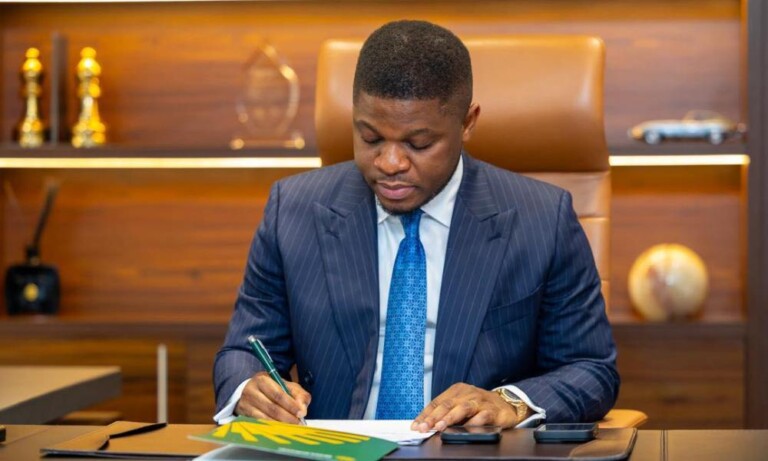
The Chief Executive Officer of GoldBod, Sammy Gyamfi, has dismissed claims by the NPP Minority Caucus that the Bank of Ghana (BoG) under the current administration is being unfairly compared to its performance under the previous government.

In a Facebook post sighted by MyNewsGh, Gyamfi highlighted the stark contrast between the performance of the BoG in 2024 under the NPP and in 2025 under the NDC.

“In 2024, the BoG bought just 45 tonnes of ASM gold through PMMC and Red Sapphire, with prices below $2,800 per ounce. That year, they made an audited loss of GHS4.18 billion,” he noted.

He further pointed out the current administration’s gains, stating, “In 2025, the BoG has purchased 102 tonnes of ASM gold, worth over $10 billion, at prices soaring above $4,400 per ounce. Despite this, the reported loss is GHS3.3 billion, far less than the previous administration, yet some are calling for a probe.”

Gyamfi said the accusations of “equalizing” are unfounded. “When you remind them of the much bigger losses the BoG incurred under the NPP, despite buying less gold at lower prices, they cry ‘equalization.’ No, we are not equalizing. We are exposing deliberate mischief and hypocrisy.”

He also emphasized the purpose of the Gold for Reserve (G4R) Program, challenging profit-focused criticism.

“The G4R program is a forex-generation initiative, not a profit-making scheme. Assessing its success by profit and loss misses the point. If profit were the goal, why did the BoG under the NPP buy gold at spot prices for two consecutive years without generating profit?”

[ad_2]

Hypocrisy at its apogee – Sammy Gyamfi to NPP

0

[ad_1]

GoldBod CEO Sammy Gyamfi has accused the NPP Minority Caucus of misrepresenting the performance of the Bank of Ghana (BoG) in the ongoing Gold for Reserve (G4R) Program.

Sammy Gyamfi’s social media statement called out the opposition for criticizing the NDC government despite historical losses under the previous administration.

“In 2024, under the NPP, the BoG bought only 45 tonnes of ASM gold at prices below $2,800 per ounce and incurred an audited loss of GHS4.18 billion,” he explained.

He contrasted that with the NDC’s record: “This year, the BoG purchased 102 tonnes of ASM gold worth over $10 billion at prices above $4,400 per ounce.

The unaudited loss is GHS3.3 billion. Yet, the NPP claims foul and demands a probe, despite this being a far better outcome.”

Gyamfi questioned the opposition’s understanding of the G4R Program. “Is this program meant to make profit or to generate foreign exchange?

The facts are clear, it is a forex-generation initiative. You don’t measure its success by profit and loss but by the broader economic impact.”

He also challenged their historical track record. “If profit were the ultimate goal, why did the BoG under the NPP buy gold at spot prices in 2023 and 2024 and fail to make profit? Hypocrisy at its apogee!” Gyamfi concluded.

[ad_2]

Leila Djansi criticizes Nollywood films on YouTube

0

[ad_1]

Filmmaker Leila Djansi shared her thoughts on Nollywood films available on YouTube in a Facebook post over the Christmas period. She said her family got her to watch a film called Bad Influencer on Christmas Day.

“My family got me to watch a Nollywood film on YouTube on Christmas day. 2 hours, 26 minutes of storytelling potential… wasted,” Djansi wrote in post shared on Facebook and sighted by MyNewsGh.

She explained that she expected criticism if she shared her opinions.

“I could offer my two cents, but I already know the replies: What have you done? You’re jealous. They’re making money. You’re bitter,” she said.

Djansi described how she spent her time watching the film, rewatching Skyfall, and eating a guava. She warned that streaming platforms could lose audiences if content quality does not improve.

“This is why Prime will leave. Netflix will leave. Platforms will collapse. Audiences will get tired and move on. And we will be looking for the next place to go populate,” she said.

The filmmaker highlighted the importance of script quality, referencing Hollywood practices.

“In Hollywood, we pay $400–$1200 for script coverage before shooting. That’s how we get Jaws. That’s how we get Black Panther. The Terminal. (Check out Rotten Tomatoes and CherryPicks film review sites),” Djansi noted.

Her brother’s comment about her approach to YouTube films gave her perspective.

“Then my brother said, you don’t watch these YouTube African films critically. And it made sense to me that these films are made for a niche audience and that was poultice enough. Let it not be said that Africa cannot deliver a discerning audience,” she said.

Djansi concluded with advice for African filmmakers using YouTube as a platform.

“The willingness to take critique is the single most reliable predictor of success. As a filmmaker, an artist… where do you want to land? That it’s on YouTube shouldn’t diminish your ability to tell a solid story. In fact, it’s why you should. YouTube is giving you a free launchpad. Make it count,” she said.

[ad_2]

Dr Kwame Adinkrah to petition Pres. Mahama for a fresh funeral for Daddy Lumba

0

[ad_1]

Pure FM Morning Show host, Dr Kwame Adinkrah, has hinted at petitioning President John Dramani Mahama for a better and befitting burial for the late Daddy Lumba.

Daddy Lumba was buried on December 13, 2025, in the Ashanti Region.

His funeral was attended by his children and Odo Broni. However, his maternal family refused to join because they did not agree with Abusuapanin’s decision to bury him on December 13.

Unlike expected, his funeral did not draw several dignitaries, as it was expected to draw, considering the family feud it created.

There were concerns raised as to the kind of funeral which was held in his memory, considering how famous and influential he was in the music space in Ghana.

Speaking at an event in Kumasi, Kwame Adinkrah noted that Daddy Lumba deserves better and that he will petition the president to ensure a befitting funeral is held for the legend.

“I’m sending a proposal to Mr President for a new funeral to be held in memory of Daddy Lumba. We have to ensure that the two women are at peace and live as one family because there are children involved,” he said to wild cheers from the crowd.

[ad_2]

Gabs draws line between public commentary and personal choice

0

[ad_1]

Florence Obinim’s recent transformation continues to dominate conversations on social media, prompting discussions about public scrutiny and personal autonomy.

Ghanaian blogger and journalist Stephen Adjetey Abban weighed in on the matter, cautioning against invasive commentary.

“As a public figure, being the wife of one of the most controversial pastors in West Africa, her appearance naturally attracts scrutiny,” he said.

However, Adjetey Abban highlighted the fine line between curiosity and intrusion.

“The intense focus on why she looks the way she does raises concerns. Such inquiries, often framed as curiosity, cross into personal territory,” he noted.

He acknowledged that there could be many reasons behind Obinim’s transformation. “I think there may be underlying health, personal, or it may simply be a deliberate personal choice. And that’s where we should not cross the line by respecting her CHOICE!”

Adjetey Abban stressed that speculation should not overshadow respect for personal decisions. “Either way, the speculation is unnecessary.

Public interest should not override basic respect for individual autonomy. So yes, I’m saying at this point, a clear line must be drawn between public commentary and respect for personal choices.”

His comments underline the growing debate over how public figures are treated online and the responsibility of social media users to respect boundaries, even when curiosity is high.

[ad_2]

Parliament urged to investigate alleged $214m–$300m financial loss

0

[ad_1]

The Minority caucus in Parliament has called for an urgent bipartisan investigation into what it describes as a significant financial loss to the state, estimated at $214 million and potentially rising to $300 million.

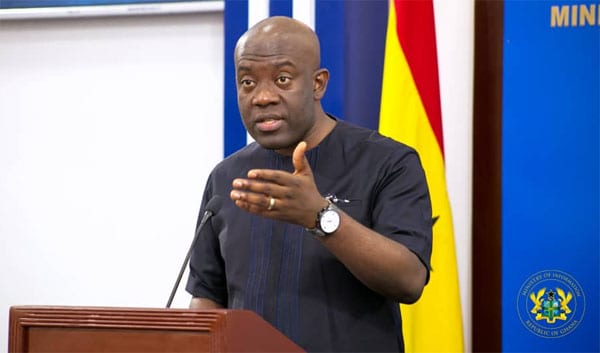
Addressing the media at a press conference on Monday, December 29, Minority spokesperson Kojo Oppong Nkrumah said Parliament must lead the process of uncovering how the loss occurred and who is responsible.

“We are demanding a bipartisan parliamentary enquiry into the circumstances under which the Republic of Ghana has lost 214 million dollars, heading to 300 million dollars,” he said.

He explained that the Minority is pushing for the creation of a special ad-hoc parliamentary committee with the authority to compel the production of documents and summon individuals connected to the scheme.

“And we’re asking for a parliamentary ad-hoc investigative committee with power to subpoena all contracts, licences and intermediaries,” Oppong Nkrumah stated.

According to him, the enquiry must require full transparency from key institutions involved.

“Under this bipartisan enquiry, we will be expecting the Bank of Ghana and the Gold Board to publish the fee structure, the pricing formula, the aggregator selecting criteria and all foreign exchange arrangements tied to this scheme,” he added.

The Minority also wants senior officials to appear before Parliament to account for their roles.

“We are expecting the Governor of the Central Bank and the Chief Executive of the Gold Board to appear before the committee and to provide all the information that is required for the Republic to understand in detail what has happened,” he said.

Oppong Nkrumah stressed that the process must lead to accountability.

“Where negligence or corruption is proven, prosecutions must follow and all recoverable funds must be clawed back to the state,” he concluded.

[ad_2]

Clash of the Titans to succeed PABLO

0

[ad_1]

Since the current National Youth Organiser of the governing National Democratic Congress (NDC), George Opare Addo alias Pablo will not be seeking reelection, three formidable names have surfaced as persons gunning to replace him: Malik Basintale, Osman Ayariga and Okai Mintah.

These personalities are powerhouses in their own right within the youth wing of the NDC.

Malik Basintale, who is currently a Deputy National Communication Officer of the party and the Chief Executive Officer (CEO) of the Youth Employment Authority(YEA), comes with a special appeal; he is a great orator and has incredible mobilisation skills. He is the man who can get 5,000 youth out on the streets in the interest of the NDC when the situation calls for it.

Okai Mintah was formerly the NDC Eastern Regional Youth Organiser. His hard work and strategic partnership have increased the support of the youth of his region for the party. He is currently the NDC Working Committee Chairman and Board Chairman of the National Service Authority(NSA). He is a very experienced organiser, having succeeded in an “opposition” region.

Osman Ayariga who currently serves as the Chief Executive Officer (CEO) of the National Youth Authority (NYA), has much experience in the youth front, having served as a Deputy National Youth Organiser of the NDC. Ayariga has strong support within the youth wing, but any of them could win the vote next year.

MyNewsGh.com in the coming days will be serialising the potentials these aspirants who are yet to officially declare their intentions to lead the youth front of the umbrella party ahead of the 2028 polls.

[ad_2]

We have every reason to believe state funds are buying galamsey gold – Kojo Oppong Nkrumah

0

[ad_1]

The Minority caucus has raised concerns that an alleged loss of hundreds of millions of dollars to the state may be linked to environmental breaches and illegal mining activities.

Speaking at the same press conference on Monday, December 29, Minority representative Kojo Oppong Nkrumah warned that the arrangement at the center of the controversy could be enabling the purchase of illegally mined gold.

“There are environmental issues that have to be dealt with,” he said.

According to him, the Minority believes urgent intervention is required to prevent public funds from being channeled into unlawful activities.

“As of now, we have every reason to believe that state money is being used to buy galamsey gold,” Oppong Nkrumah stated.

He said the caucus would be demanding immediate regulatory action to protect forest reserves and improve monitoring systems.

“One of the things we’ll be asking for is a suspension of permits in forest reserves and the introduction of serious measures on traceability,” he explained.

Oppong Nkrumah noted that transparency failures within the gold framework have created room for abuse and environmental harm.

“We need to understand in detail what has happened and put measures in place to ensure that it doesn’t happen again,” he said.

He added that any wrongdoing established through investigations must attract sanctions.

“Where negligence or corruption is proven, prosecutions must follow,” he said.

[ad_2]

Why drinking plastic bottled water daily is now a major health risk

0

[ad_1]

Daily consumers of bottled water ingest over 90,000 more microplastic particles than people who drink tap water, according to a new review of research that calls for urgent regulatory measures to manage the risks.

Drinking water in plastic bottles contains countless particles too small to see. New research finds that people who drink water from them on a daily basis ingest far more microplastics than those who don’t.

Sarah Sajedi was visiting Phi Phi Island, Thailand, when she was dazzled by the beautiful scenery of the Andaman Sea. However, when she looked down at her feet, she saw that the white sandy beach was covered with plastic debris, most of which was plastic bottles.

After many years in the business world as the cofounder of an environmental software company, the experience inspired Sajedi to become a researcher. She had always had a passion for waste reduction, but she realised that the problem was consumption itself.

Thus, as a doctoral student at Concordia University in Canada, Sajedi reviewed over 140 scientific papers to determine the effects of plastic bottles on the human body. She found that people ingest an average of 39,000 to 52,000 microplastic particles per year from food and drinking water, and those who use bottled water daily ingest nearly 90,000 more microplastic particles into their bodies.

“Drinking water from plastic bottles is fine in an emergency, but it isn’t something that should be used in daily life,” said Sarah Sajedi, lead author of the new review published in the Journal of Hazardous Materials.

Microplastics are known to enter the bloodstream and reach vital organs, potentially causing chronic inflammation, respiratory issues, stress on cells, hormonal disruption, impaired reproduction, neurological damage, and various kinds of cancer. But their long-term effects remain poorly understood due to the lack of standardised testing methods to assess them within tissues.

In the review, researchers examined the global impact of tiny plastic particles ingested from single-use plastic water bottles on human health, drawing insights from over 141 scientific articles.

The review suggests that people meeting their daily recommended water intake solely from single-use plastic water bottles may ingest an additional 90,000 microplastics per year compared to those drinking only tap water who ingest 4,000 microplastics a year.

The study also says that while existing research tools detect even very small particles, these do not reveal what the particles are made of.

And the tools used to determine the composition of plastic particles tend to miss the smallest of them, researchers note, calling for developing standardised global testing methods to measure particles accurately.

“The review highlights the chronic health issues linked to exposure to nano- and microplastics, including respiratory diseases, reproductive issues, neurotoxicity, and carcinogenicity,” researchers wrote.

“We highlight the challenges of standardised testing methods and the need for comprehensive regulations targeting nano- and microplastics in water bottles.”

“We highlight the challenges of standardised testing methods and the need for comprehensive regulations targeting nano- and microplastics in water bottles.”

The research also emphasises the need to transition from single-use plastics to sustainable, long-term water access solutions.

“Addressing public access to safe drinking water and improving water infrastructure are vital in reducing reliance on single-use plastics,” the review noted.

“Comprehensive research is still needed to fully understand the health and environmental impacts of nano- and microplastics in bottled water.”


[ad_2]

Vice President explores fish mall idea to empower women in inland fishing communities

0

[ad_1]

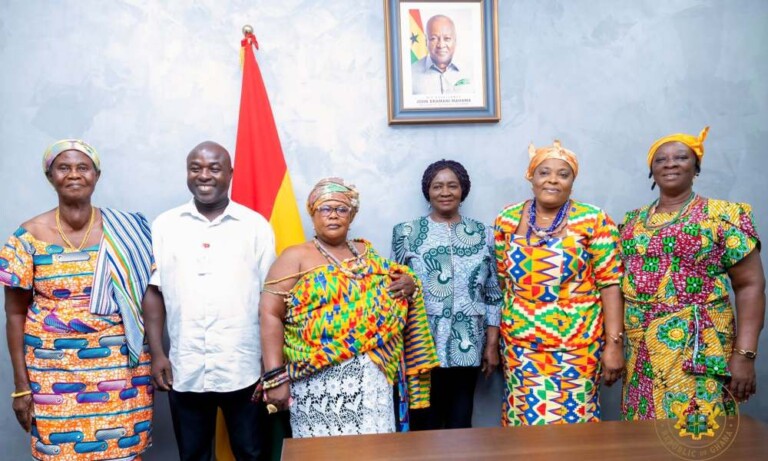
Vice President Jane Naana Opoku-Agyemang has reaffirmed the government’s commitment to improving the welfare of inland fishing communities, with particular focus on the dignity and economic empowerment of women involved in fish trading.

In a statement following a meeting with the National Inland Canoe Fishermen Council, the Vice President said the engagement centered on challenges confronting the sector and the living conditions of women who depend on fish trading for survival.

“I held a meeting with the National Inland Canoe Fishermen Council to discuss issues affecting their members, especially the welfare and dignity of women in fish trading,” she stated.

She acknowledged the long-standing role of the Council in supporting inland fishing communities, noting that its advocacy has contributed to poverty reduction efforts since its establishment in 1983.

“The Council has played a vital role in advocating for improved livelihoods and poverty reduction among inland fishing communities since its inception in 1983,” she said, adding that government remains committed to initiatives that uplift people at the grassroots.

According to the Vice President, a key concern raised during the discussions was the lack of safe and organized trading spaces for women.

“We spoke about the urgent need to provide safe, organized, and dignified spaces for women to sell their fish,” she said.

She revealed that one of the major proposals explored was the establishment of a fish mall, describing it as a practical and transformative intervention.

“In this regard, the idea of a fish mall was explored as a practical and transformative solution.

When realized, this facility would offer women a secure environment to trade, add value to their products, and improve their incomes, while also strengthening the local fishing economy,” she explained.

Vice President Opoku-Agyemang stressed that the proposed initiative aligns with the broader vision of inclusive development.

“The proposed mall is reflective of inclusive development and ensuring that economic progress reaches every segment of society,” she said.

She concluded by assuring the Council of government’s readiness to collaborate with relevant partners to advance the idea. “We aim to work with the Council and other stakeholders to build a fairer economy,” she added.

[ad_2]