

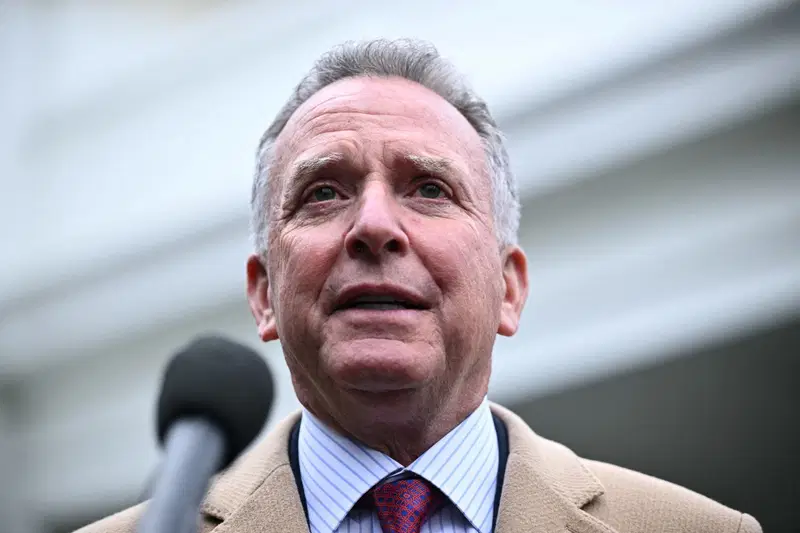
Senior U.S. envoys Steve Witkoff and Jared Kushner arrived in Doha on Tuesday for discussions with Qatari officials and mediators, the Gulf state’s foreign ministry said. But Qatar made clear the visit does not include direct negotiations with Iran.
Foreign ministry spokesman Majed Al Ansari told reporters that Witkoff and Kushner “are here in Doha to meet with mediators, with Qatari officials, and the talks will be around all regional issues.” He said the agenda includes Iran, but also Lebanon and other matters affecting Middle East stability
Both Washington and Tehran had previously indicated they would send officials to Qatar following a memorandum of understanding aimed at ending the broader Middle East conflict that escalated on February 28 after U.S.-Israeli strikes on Iran. That raised speculation about face-to-face talks in the Qatari capital.
He explained that Iran’s engagement in Doha is currently at a “technical” level. An Iranian technical delegation, he said, “travels to and from Doha based on the progress of negotiations. There is currently no high-level delegation present
According to the Qatari spokesman, the lower-level discussions are structured around several tracks. These include nuclear issues, economic and state performance questions, and regional security.
Technical talks are typically used to work through details, language, and implementation mechanisms before senior officials or political leaders meet. They do not carry decision-making authority and are often kept separate from public diplomacy.
The existence of these contacts reflects that communication channels remain open after weeks of heightened tension, even if direct U.S.-Iran negotiations are not taking place in Doha this week.
Qatar has positioned itself as a key mediator in recent rounds of regional diplomacy. Its involvement increased after an initial ceasefire in April was brokered with help from Pakistan, and Doha has since hosted multiple rounds of indirect contact between various parties.
The emirate had earlier stepped back from mediation when Tehran launched an unprecedented aerial bombardment against Gulf states in retaliation for the February U.S.-Israeli strikes. At that point, Doha said it would not mediate under active fire.
In recent weeks, however, Qatar resumed its role after the U.S. and Iran agreed to halt attacks under the terms of a memorandum of understanding. That agreement was intended to create space for de-escalation and for negotiations on the longer-term issues that fuel the conflict
Ansari said Witkoff and Kushner’s meetings are not limited to Iran. Lebanon is also on the table, reflecting concerns over border stability, Hezbollah’s status, and the implementation of a U.S.-brokered framework signed last week.
The inclusion of Lebanon signals that Washington views the region’s crises as interconnected. Efforts to calm the Strait of Hormuz, manage nuclear diplomacy, and address proxy conflicts are being discussed in parallel, with Qatar acting as a hub for coordination.
For the U.S., sending Witkoff, a veteran negotiator, alongside Kushner, a former senior White House adviser with experience in Middle East deals, underscores the seriousness with which Washington is treating the moment. Both envoys have been involved in previous rounds of diplomacy in the Gulf.
Tehran has maintained that it is not entering final-agreement negotiations at this stage. Iranian officials have said any talks will depend on progress in technical working groups and on adherence to the terms of the February memorandum.
That memorandum, announced earlier this month, outlined steps to end hostilities and create a path toward broader regional security arrangements. It did not resolve core disputes, but it provided a framework for lower-level experts to meet.
The current arrangement allows Iran to keep its delegation at a technical level while it assesses the U.S. position through Qatari intermediaries. This approach gives both sides flexibility and avoids the political pressure of a high-profile direct meeting.
Qatar’s geographic position, diplomatic ties to both Washington and Tehran, and experience hosting sensitive negotiations make it a preferred venue for this phase of diplomacy. The emirate has previously mediated prisoner exchanges, ceasefires, and economic talks involving regional actors.
By keeping the U.S. and Iranian delegations on separate tracks while facilitating contact through Qatari officials, Doha is attempting to maintain momentum without forcing either side into talks it is not ready to hold publicly
For now, the message from Doha is one of managed expectations. U.S. envoys are in the Qatari capital for broad regional consultations. Iranian experts are engaged in technical discussions, but no direct U.S.-Iran meeting is scheduled in the immediate term.
Whether those technical contacts produce enough progress to justify a higher-level encounter will depend on movement in the nuclear, economic, and security tracks. Qatar says it will continue to host and mediate as long as both sides see value in the process.
The arrival of Witkoff and Kushner shows Washington’s intent to stay engaged. The absence of direct talks shows that both sides are still calibrating how, and when, to move from technical exchanges to political negotiation.