


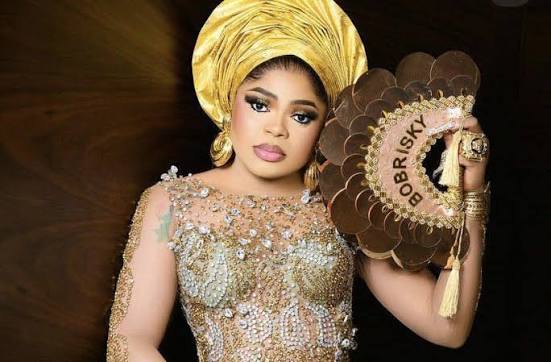
A federal government investigative panel has released its findings on the controversy surrounding the six-month prison sentence served by controversial crossdresser Bobrisky, revealing that he allegedly received privileges far beyond what is permitted under Nigerian correctional regulations.
According to the panel’s report, Bobrisky was housed in a specially soundproofed cell and reportedly enjoyed several benefits not available to ordinary inmates during his stay at both the Medium Security and Maximum Security Custodial Centres in Kirikiri, Lagos.
The report stated that he had access to mobile phones, was allowed to provide his own meals, and received unrestricted visits from family members and friends.
The panel also found that another inmate had been assigned to attend to his personal needs while in custody.
Investigators concluded that these privileges violated established correctional procedures and raised serious concerns about how the inmate was treated during his imprisonment.
As part of its recommendations, the panel urged security agencies to investigate whether Bobrisky directly or indirectly bribed officials of the Economic and Financial Crimes Commission (EFCC) or the Nigerian Correctional Service. If evidence of corruption is established, the panel advised that criminal charges should be filed under relevant anti-corruption laws.
The panel also recommended that the Nigerian Correctional Service consider legal action against Bobrisky over statements it described as damaging to the institution’s reputation.
In addition, social media activist VeryDarkMan was mentioned in the report.
The panel recommended that authorities examine possible legal action against him over allegations relating to libel, incitement, and data privacy violations linked to the circulation of unverified claims concerning government agencies and officials.The investigation was launched after an audio recording surfaced online following Bobrisky’s release from prison.
The recording allegedly contained conversations suggesting that certain officials may have helped him avoid serving his sentence under normal prison conditions.
The claims sparked widespread public debate and prompted the Minister of Interior to establish an independent panel to investigate the allegations and determine whether any misconduct occurred within the correctional system.
Following the release of the report, reactions flooded social media, with some Nigerians demanding accountability from all parties involved, while others questioned why the matter continues to receive significant attention amid other national challenges.The findings have once again placed the spotlight on Nigeria’s correctional system and reignited discussions about equality before the law, transparency, and accountability within public institutions.